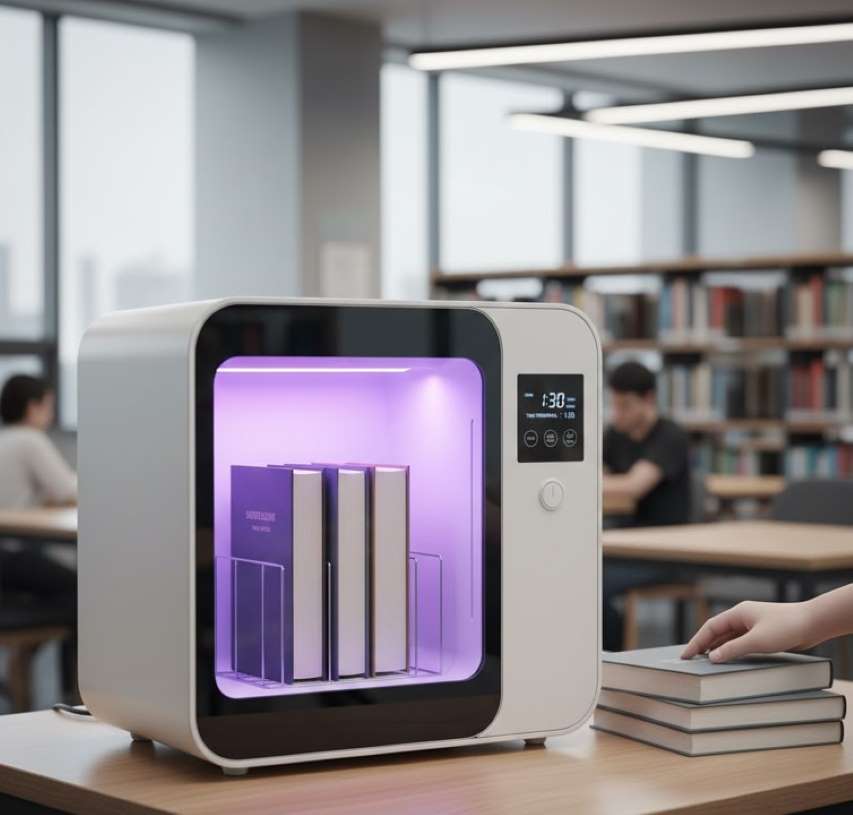
Preserving Knowledge, Eliminating Threats
A Book Sterilizing Machine is a specialized device designed to disinfect and decontaminate books, documents, and other library materials without causing damage to the paper, ink, or bindings. It addresses the critical need to preserve historical and frequently handled collections while ensuring they are safe for public use by eliminating mold spores, bacteria, viruses, booklice, and other biological threats.
The Core Problem: What Threatens Books?
Biological Agents: Mold, mildew, bacteria (including potential pathogens), and viruses.
Insects & Pests: Booklice (psocids), silverfish, cockroach allergens, and their eggs.
Human Contamination: Oils, skin cells, and germs transferred through handling.
Environmental Factors: Musty odors caused by volatile organic compounds (VOCs) from mold and decay.
Primary Technologies & How They Work
Ozone-Based Sterilization
Process: The machine generates ozone (O₃), a powerful oxidizing gas, within a sealed chamber.
Mechanism: Ozone ruptures the cell walls of microorganisms and breaks down odor molecules at a molecular level.
Cycle: Typically, a 15–60-minute cycle, followed by a catalytic conversion phase to break down residual ozone into harmless oxygen.
Best For: Eliminating deep-set mold, pervasive musty odors, and a broad spectrum of microbes. Penetrates closed books.
UV-C Light Sterilization
Process: Uses short-wavelength ultraviolet light (UV-C, 254 nm) inside a reflective chamber.
Mechanism: UV-C radiation disrupts the DNA/RNA of microorganisms, preventing them from replicating.
Cycle: Books are exposed for a set duration (e.g., 30 seconds to several minutes per side).
Best For: Surface-level disinfection of covers and page edges. Limited penetration; cannot reach spores between pages of a closed book. Often used in combination with other methods.
Heat-Based Treatment (Low-Temperature Thermal)
Process: Circulates dry, heated air at carefully controlled temperatures (typically 50-65°C / 122-149°F).
Mechanism: Sustained heat denatures proteins in pests and microbes, effectively killing them.
Cycle: Longer cycles (several hours) to ensure heat penetrates the entire book block.
Best For: Eradicating insect infestations (eggs, larvae, adults) and moisture-related mold. Must be precisely controlled to avoid damage.
Key Components & Features
| Component | Function & Importance |
|---|---|
| Sealed Treatment Chamber | An airtight compartment that contains the sterilizing agent (ozone, UV-C) and ensures safety and efficacy. |
| Control Panel & Timer | Allows programming of cycle type, duration, and intensity. Digital displays provide status updates. |
| Gas Generation/Catalytic System | In ozone models: generates O₃ and later catalytically converts it back to O₂. |
| UV-C Lamp Arrays | In UV models: positioned to maximize exposure on book surfaces. |
| Air Circulation System | Fans ensure even distribution of ozone or heat throughout the chamber and around the books. |
| Safety Interlocks | Automatically shuts off UV light or ozone generation if the door is opened during a cycle. |
| Odor & Filtration System | Some units include carbon filters to absorb residual odors or particles after treatment. |
| Rolling Racks/Trays | Allow for easy loading/unloading of multiple books and ensure proper spacing for agent penetration. |
Step-by-Step: Typical Sterilization Process
Inspection & Preparation: Visually inspect books for severe damage. Remove any paper clips or non-paper inserts if possible. Lightly brush off loose debris.
Loading: Place books upright on racks, ensuring they are not overly tight. Slightly fan open very thick books if the method allows.
Cycle Selection: Choose the appropriate cycle based on contamination type (e.g., "Odor Removal," "Mold Treatment," "General Disinfection").
Initiation & Treatment: Close and seal the chamber door. Start the cycle. The machine will run automatically.
Aeration & Completion: After the main cycle, a post-treatment phase (like ozone conversion or cooling) occurs. An indicator signals when it is safe to open.
Unloading & Resting: Remove books. Some protocols recommend letting them rest in a clean, dry area for 24 hours before returning to shelves.
Applications & Primary Users
Public & University Libraries: For sanitizing returned books, treating donated collections, and rehabilitating books from musty storage.
Archives & Museums: To protect rare manuscripts, historical documents, and special collections from biodeterioration.
Schools & Daycares: To maintain hygiene for frequently handled children's books and educational materials.
Used Bookstores & Antiquarians: To increase the value and appeal of inventory by removing odors and ensuring cleanliness.
Home Libraries & Collectors: For individuals with valuable collections, allergies, or who acquire books from uncertain storage conditions.
Benefits & Advantages
Non-Destructive: When used correctly, does not harm paper, bindings, or most inks (always test a small area first).
Chemical-Free Process: Eliminates the need for liquid disinfectants or toxic fumigants like ethylene oxide.
Effective Penetration: Ozone and heat can reach contaminants between pages and inside bindings where surface cleaning fails.
Odor Elimination: Effectively neutralizes musty, smoky, or mildew odors rather than masking them.
Preventative Conservation: Can halt active mold growth and prevent cross-contamination in collections.
User Safety: Protects staff and patrons from exposure to allergens and potential pathogens.
Limitations & Important Cautions
Not a Cleaning Substitute: Does not remove dirt, dust, or physical stains. Physical cleaning should precede sterilization.
Material Sensitivity: Certain materials can be damaged: Ozone may accelerate the deterioration of rubber, some dyes, or leather. Heat can damage wax, certain adhesives, or vellum. UV-C can fade pigments and degrade paper if overexposed.
Safety Protocols: Ozone is a respiratory irritant. Machines must have proper seals and conversion systems. UV-C light is harmful to eyes and skin.
Cycle Time: Treating a large collection can be time-consuming due to chamber capacity limits.
Cost: Commercial-grade machines represent a significant investment for institutions.
Comparison of Sterilization Methods
| Aspect | Ozone Treatment | UV-C Light Treatment | Low-Temperature Heat |
|---|---|---|---|
| Penetration | Excellent (gas permeation) | Poor (surface only) | Good (slow heat transfer) |
| Cycle Time | Medium (30-90 min) | Fast (minutes) | Slow (several hours) |
| Best Against | Mold, odors, broad-spectrum microbes | Surface bacteria & viruses | Insects, insect eggs, moisture mold |
| Potential Damage Risk | Organic materials, certain colors | Fading, paper degradation | Heat-sensitive materials, adhesives |
| Operational Cost | Low (electricity) | Very Low (electricity, lamp replacement) | Moderate (electricity) |
Care, Maintenance & Safety
Regular Cleaning: Wipe down the interior chamber with a soft, dry cloth. Clean UV lamps with alcohol wipes as per manual.
Filter Replacement: Replace carbon or HEPA filters on schedule to maintain efficiency.
Lamp Replacement: UV-C lamps lose intensity over time; replace annually or per manufacturer hours.
Seal Inspection: Regularly check door gaskets for integrity to ensure a proper seal.
Safety First: Always use personal protective equipment (PPE) when handling contaminated books. Ensure the machine is in a well-ventilated room.
Buyer's Guide: Selecting a Machine
Assess Primary Need: Identify your main threat (mold, insects, general germs, odors).
Choose Technology: Match the technology to your need (Ozone for mold/odor, UV-C for surface germs, Heat for insects).
Chamber Capacity: Determine the volume (in liters or number of standard books) you need to process per cycle.
Safety Certifications: Look for machines with CE, UL, or other relevant safety certifications.
Ease of Use: Consider interface clarity, loading mechanisms, and cycle pre-sets.
Brand & Support: Choose a reputable supplier with good technical support and clear documentation.
Budget: Consider both upfront cost and long-term operational costs (filter, lamp replacements).
Guardian of Cultural Heritage and Public Health
A Book Sterilizing Machine is more than a piece of equipment; it is a vital tool in the ongoing mission to preserve our written heritage and ensure safe access to information. By leveraging advanced, non-invasive technologies like ozone and UV-C, these machines provide a scientifically sound solution to a timeless problem. For libraries, archives, and collectors, they represent a proactive investment in collection longevity, user health, and the preservation of knowledge for future generations. The key to success lies in understanding the technology's principles, respecting its limitations, and integrating its use into a comprehensive preservation and hygiene strategy.
 |  |  |
 |  |  |