The Hidden Element in Your Beauty Routine
While we meticulously choose serums, moisturizers, and cleansers, we often overlook the most fundamental element that touches our skin daily: water. For many, tap water—with its chemicals, minerals, and varying pH—can be a silent aggressor against skin health. Enter the skin care water filter, a dedicated tool designed to transform your tap water into a gentler, more compatible ally for your complexion.
What is a Skin Care Water Filter?
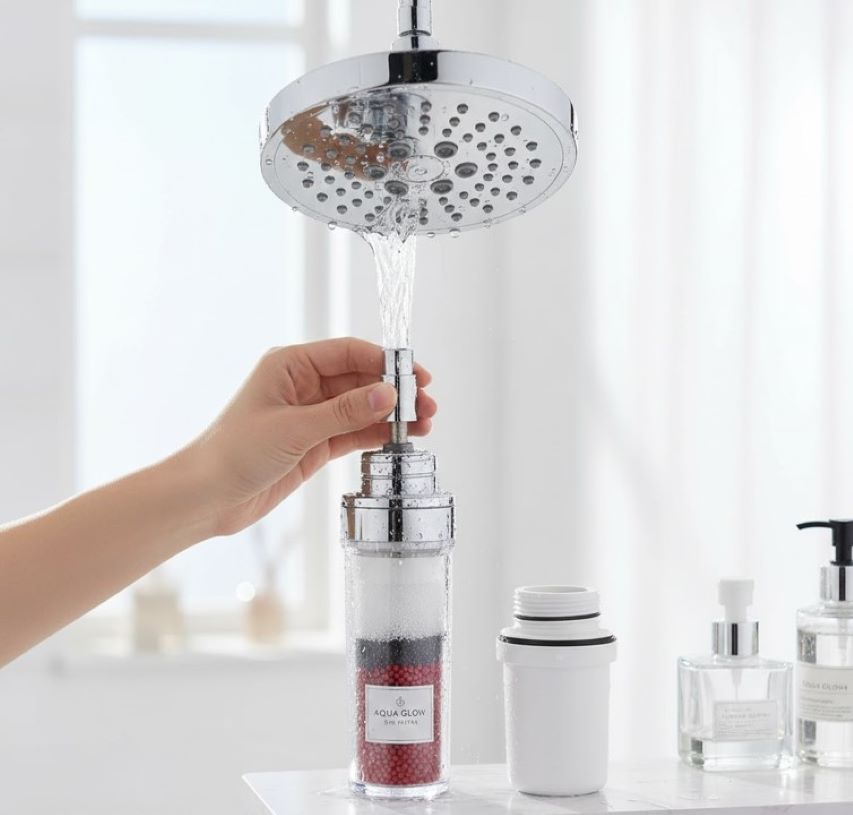
A skin care water filter is a specialized filtration device, typically installed on a showerhead, faucet, or as a whole-house system, that removes or reduces specific contaminants from water that can be harmful or irritating to the skin and hair.
It goes beyond basic sediment filters to target the specific compounds that impact dermatological health.
Why Tap Water Can Be Problematic for Skin
Understanding what’s in your water is key:
Chlorine & Chloramines: Added by municipalities to disinfect water. They strip the skin and hair of natural oils, leading to:
Dryness, flakiness, and irritation.
Exacerbation of eczema, psoriasis, and rosacea.
Disruption of the skin's protective microbiome.
Hard Water (High Calcium & Magnesium): Creates "scale" and leaves a mineral film.
Forms a barrier that prevents cleansers from lathering and rinsing cleanly, leading to residue buildup.
Can clog pores and contribute to congestion and dullness.
Dries out the skin and can make hair lifeless and brittle.
Heavy Metals (e.g., Lead, Copper, Iron): Can come from aging pipes.
Generate free radicals, accelerating skin aging (fine lines, wrinkles).
Can cause irritation and inflammation.
Unbalanced pH: Tap water is often more alkaline (higher pH) than skin's natural acidic mantle (pH ~4.5-5.5).
Alkaline water disrupts the acid mantle, compromising the skin's barrier function.
This leads to increased sensitivity, dryness, and vulnerability to bacteria.
How Skin Care Water Filters Work: Filtration Technologies
These filters use a combination of media to address contaminants:
KDF (Kinetic Degradation Fluxion): A high-purity copper-zinc formulation that removes chlorine, chloramines, heavy metals, and inhibits scale buildup through a redox (reduction-oxidation) reaction.
Activated Carbon: Excellent for adsorbing chlorine, bad odors, and some organic compounds. Often used in conjunction with other media.
Vitamin C (Ascorbic Acid) Filters: Specifically neutralize chlorine and chloramines through a chemical reaction. A popular choice for shower filters as they are very effective and add no sodium.
Chelation Filters: Use compounds like EDTA to bind to hard water minerals, preventing them from depositing on skin and hair.
Magnetic or Catalytic Scale Inhibitors: Alter the electromagnetic properties of minerals to prevent hard scale formation (does not remove minerals, but changes their behavior).
Ceramic Balls & Tourmaline: Sometimes included to help soften water and add beneficial negative ions.
The best filters often combine 2-3 of these technologies in a multi-stage system.
Key Benefits of Using a Filtered Water System for Skin Care
For Sensitive & Condition-Prone Skin: Dramatically reduces irritation for those with eczema, dermatitis, rosacea, or psoriasis by removing chlorine and balancing pH.
Enhanced Hydration: Prevents the stripping of natural oils, allowing skin to retain moisture more effectively.
Improved Product Efficacy: Allows cleansers, toners, and treatments to work as formulated without interference from hard water residue or chlorine.
Clearer Complexion: Reduces pore-clogging mineral and soap scum buildup, leading to fewer breakouts and blackheads.
Anti-Aging Support: Minimizes free radical damage from heavy metals and reduces the oxidative stress that breaks down collagen.
Healthier Hair & Scalp: Results in softer, shinier hair, less dryness, and reduced scalp itchiness and dandruff.
Overall Softer Skin: Water feels noticeably silkier, and skin feels smoother to the touch post-shower.
Choosing the Right Filter for Your Needs
Filter Type | Best For | Pros | Cons |
|---|---|---|---|
| Shower Filter | Primary investment for most; addresses full-body exposure. | Easy DIY install, immediate impact on skin/hair. | Needs cartridge replacement every 6-12 months. |
| Faucet-Mounted Filter | Skincare routines at the bathroom sink (face washing). | Targeted for facial care, often affordable. | Can slow water flow; may look bulky. |
| Under-Sink Filter | A permanent, hidden solution for the bathroom sink. | High capacity, doesn't clutter countertop. | Requires professional installation. |
| Whole-House System | Ultimate solution for skin, hair, appliances, and laundry. | Softens/filters water at every outlet. | High upfront cost, requires professional install. |
Selection Checklist:
Identify Your Problem: Is it dryness (chlorine)? Residue (hard water)? Irritation (both)?
Check Filter Certifications: Look for NSF/ANSI standards (e.g., Standard 177 for shower chlorine reduction).
Filter Life & Cost: Note cartridge lifespan and replacement cost to understand long-term investment.
Installation & Flow Rate: Ensure it's compatible with your fixtures and maintains adequate water pressure.
Maintenance is Crucial
A clogged or expired filter is ineffective and can harbor bacteria.
Replace cartridges strictly according to the manufacturer's schedule (usually 6-12 months for shower filters, or after a set number of gallons).
Note the change date on your calendar.
An Investment in Skin Health
A skin care water filter is not a magical cure-all, but it is a powerful foundational step. By removing irritants and creating a gentler aqueous environment, it allows your skin to function at its best and your valuable skincare products to perform optimally. For anyone serious about dermatological health, achieving a radiant complexion starts with addressing the quality of the water that touches it thousands of times a year. Consider it the silent, supportive pillar of an intelligent skincare regimen.
 |  |  |
 |  |  |