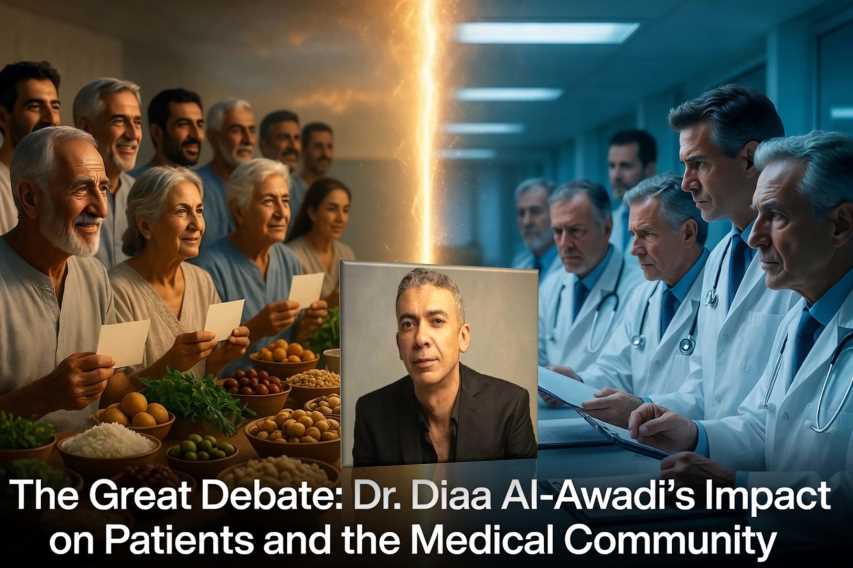
Behind the scientific debates, the revoked licenses, and the 25 unverified theories lie the people whose lives were most intimately touched by the teachings of Dr. Diaa Al-Awadi. Their stories reveal the powerful—and often perilous—intersection of hope, belief, and evidence. This article presents a balanced, human-centered account of those who walked away healed, those who walked away harmed, and the grey zone in between.
The Followers: Stories of Transformation and Belief
For tens of thousands of people, Al-Awadi’s “Al-Tayyibat” system was not a fad but a last lifeline after years of failed treatments. Their testimonials flooded social media, creating a formidable narrative of grassroots healing that no professional body could simply dismiss.
🧠 Case 1: The Migraine That Disappeared
Mona S., 42, Alexandria
Mona had suffered from chronic, disabling migraines for almost twenty years. She had tried neurologists, painkillers, beta-blockers, and even Botox injections. A friend convinced her to watch Al-Awadi’s Stomach-Headache Theory video.
“I didn't believe it. How could my brain pain come from my stomach? But I was desperate. I followed the Tayyibat system exactly—no sugar, no dairy, only rice, potatoes, dates, ghee, and red meat. In three months, my migraines dropped from fifteen a month to two. I felt I had my life back.”
Mona’s story, shared in an Arabic-language support group with over 200,000 members, became a pillar of the movement. For her and many like her, the fact that her neurologist had never once asked about her diet was proof of modern medicine’s blind spot.
🦵 Case 2: The Sciatica That Walked Away
Hassan R., 55, Giza
Hassan, a construction supervisor, had been bedridden for weeks with a severe sciatic flare-up. An MRI showed a herniated disc, and surgery was scheduled. Al-Awadi’s Colon-Sciatica Theory claimed that sciatica was simply a “blocked and inflamed colon” pressing on the nerve.
“I cancelled the surgery. My family thought I was insane. I started the Colon Protocol—fasting, eating only good foods, and drinking water only when thirsty. Within one week the pain eased. In a month I was back on site. I still have the herniated disc, but I have no pain. Explain that to me.”
Hassan’s outcome, while remarkable to him, is explained by gastroenterologists as a classic case of dietary anti-inflammatory effects calming a hypersensitive gut-nerve axis—not a cure for the herniated disc itself.
⚖️ Case 3: The Diabetes “Reversal” That Raised Eyebrows
Kareem A., 48, Mansoura
Kareem had been on metformin for type 2 diabetes for five years. After adopting Al-Tayyibat, he lost 22 kilograms in six months. His HbA1c dropped from 8.9% to 5.7%, and his doctor halved his medication. In his YouTube testimonial, Kareem shouted:
“I am proof that insulin resistance is a myth! My body healed when I stopped poisoning it with white sugar and vegetable oils.”
Endocrinologists who reviewed his case publicly noted that significant weight loss itself—achievable through many calorie‑restricted or low‑carbohydrate diets—improves insulin sensitivity, and that attributing his recovery to Al-Awadi’s specific theories confuses correlation with causation.
The Victims: When Hope Turns into Harm
For every success story proclaimed online, there exists a quieter, darker tragedy—often buried under legal restrictions, family shame, or the very conspiracy narratives that Al-Awadi’s followers embraced.
💔 Case 4: The Child Who Fell into a Coma
Youssef E., 7, Dakahlia
This is the case that sent shockwaves through the Egyptian medical community. Youssef was a type-1 diabetic boy whose parents had been following Al-Awadi’s videos. In one viral clip, Al-Awadi declared: “Insulin is a fraud. It does not cure diabetes; it kills the patient slowly.”
Youssef’s parents stopped his insulin injections and placed him on the Tayyibat diet. Within 48 hours, Youssef was rushed to the emergency room in diabetic ketoacidosis and slipped into a coma. He survived, but with neurological damage. The case prompted Egypt’s Ministry of Health to issue an urgent public warning and reinforced the criminal complaint against Al-Awadi for endangering public health.
“We only wanted what was best for our son,” his mother told reporters. “We believed the doctor.”
🌫️ Case 5: The Breast Cancer That Metastaized in Silence
Salma H., 39, Cairo
Diagnosed with early-stage, hormone-receptor-positive breast cancer, Salma was advised to undergo a lumpectomy followed by radiation and tamoxifen. After watching Al-Awadi’s Oncogenic Interstitial Environment Theory, she became convinced that the tumor was simply the body’s response to a “toxic internal environment” and that surgery and chemotherapy would only poison her further.
She refused all conventional treatment and followed the Tayyibat system with religious dedication. For a year, she felt well. But the cancer had silently spread to her bones and liver. When pain finally forced her back to her oncologist, her disease was stage IV. She started urgent palliative chemotherapy but died eight months later.
Her sister later wrote in a Facebook post that has since been deleted:
“I love my sister. I also hate the man who convinced her that rice and dates could beat cancer. He did not hold her hand when she took her last breath.”
🔬 Case 6: The Bipolar Patient Who Spiked into Mania
Ahmed G., 29, Sharqia
Ahmed had been stable on mood stabilizers for bipolar disorder for four years. Al-Awadi’s teachings dismissed antidepressants and psychotropic drugs as “toxins.” In a video, Al-Awadi claimed: “The brain can heal itself if you cleanse the colon. Mental illness is a digestive lie.”
Ahmed threw away his medication, began a strict Tayyibat fast, and within three weeks spiraled into a severe manic episode with psychotic features. He was involuntarily hospitalized after a public altercation. His psychiatrist testified to the prosecution that the abrupt cessation of mood stabilizers—triggered by Al-Awadi’s video—directly caused the relapse.
The Grey Zone: Undeniable Symptom Relief Without Scientific Validation
Not all patient outcomes fall neatly into “healed” or “harmed.” A large cohort of Al-Awadi’s followers, particularly those with irritable bowel syndrome (IBS), chronic fatigue, fibromyalgia, and functional dyspepsia, reported significant—sometimes life-changing—symptom relief.
These conditions share a common thread: they are often exacerbated by highly processed foods, irregular eating, chronic stress, and gut dysbiosis. Al-Awadi’s protocol—eliminating refined sugar, industrial seed oils, emulsifiers, and food additives—mirrors, in part, an anti-inflammatory whole-foods elimination diet. The daily intermittent fasting, the strict avoidance of constant snacking, and the heavy reliance on potassium-rich cooked vegetables and bone broth (implicit in his meat recommendations) would, by any gastroenterologist’s estimation, soothe many inflamed guts.
Thus, the real tragedy of the Al-Awadi phenomenon may not be that his dietary advice was entirely wrong, but that it was inextricably bundled with lethal exaggerations—that insulin was a fraud, that cancer could be starved with rice, that psychiatric drugs were poison. This bundling meant that grateful IBS patients often became evangelists for his most dangerous cancer theories, lending them unearned credibility.
Voices of Support from the Medical Community
While the official medical establishment in Egypt moved decisively against Dr. Al‑Awadi, a number of licensed physicians—both within Egypt and abroad—have publicly acknowledged that parts of his dietary philosophy deserved attention, even if they disagreed with his more extreme statements. Their perspectives, gathered from interviews, social media posts, and professional commentary, add important nuance to the debate.
Dr. Ahmed Farag, Consultant Gastroenterologist, Cairo
“I am not an Al‑Awadi follower, but I must admit that his elimination protocol—whether he invented it or not—resembles the low‑FODMAP and whole‑food elimination diets we already use for severe IBS. Many of my own patients came to me after trying ‘Al‑Tayyibat’ and reported dramatic improvements in bloating, pain, and bowel habits. We should ask ourselves: why did these patients not get this advice from their own doctors first? There is a kernel of nutritional wisdom in his system that the medical community overlooked for too long.”
Dr. Farag does not endorse Al‑Awadi’s theories on cancer or diabetes, but he believes the aggressive dismissal of the entire system was a missed opportunity to engage patients who were clearly seeking dietary solutions.
Dr. Hala Mostafa, Integrative and Functional Medicine Practitioner, Dubai
“I watched many of his videos carefully. When he spoke about the dangers of ultra‑processed foods, industrial seed oils, and constant snacking, he was echoing what functional medicine has been saying for two decades. The tragedy is that he mixed solid nutritional advice with claims that insulin is a fraud and that colon cleansing can cure cancer. The baby was thrown out with the bathwater by the medical authorities. His millions of followers didn’t appear from nowhere—they are a symptom of a system that has ignored the role of food in chronic disease.”
Dr. Mostafa, who treats patients with metabolic syndrome and autoimmune conditions, uses food‑as‑medicine approaches daily and says Al‑Awadi’s popularity should serve as a “wake‑up call” for conventional medicine rather than a reason for ridicule.
Dr. Yasser El‑Hawary, Cardiologist and Cholesterol‑Sceptic, Alexandria
“Al‑Awadi’s ‘Myth of Cholesterol’ theory is not original—it has been discussed in international medical literature for years. The idea that dietary saturated fat is the main driver of heart disease has been seriously questioned. On that specific point, he was closer to the current scientific debate than many of his critics. I do not agree with his rejection of insulin, but his courage to speak about the over‑prescription of statins and the corruption in the food industry earned him my respect.”
Dr. El‑Hawary has long been a controversial figure himself, advocating for a re‑evaluation of the diet‑heart hypothesis. He sees Al‑Awadi as part of a global movement of dissident doctors, even if he distances himself from the unlicensed practice of giving oncological advice.
Dr. Lamia Ben Salem, General Practitioner and Nutrition Researcher, Tunisia (via online commentary)
“What struck me most is how his patients described feeling ‘heard’ for the first time. When I listen to their testimonials, I hear not only gratitude for symptom relief, but gratitude for being given a clear, actionable plan. That is something we in white coats often fail to provide. His theories may lack clinical trials, but the patient‑reported outcomes in functional gastrointestinal disorders are hard to ignore. We should study, not silence.”
Dr. Ben Salem has called for independent academic research into the Al‑Tayyibat protocol to separate the testable dietary components from the unverified medical claims, so that any genuine benefits can be incorporated into evidence‑based practice.
Angry Voices from the Medical Frontline
Doctors who treated Al-Awadi’s victims spoke out with a mixture of anger and sorrow.
Dr. Mona El-Shabrawy, Consultant Endocrinologist, Mansoura University:
“I am not against dietary management. I prescribe low-carb, anti-inflammatory diets every day. But telling a parent to stop their child’s insulin is not a ‘theory’—it is manslaughter by misinformation. We have seen three cases of DKA in children linked to his videos in this governorate alone.”
Dr. Ibrahim Salah, Psychiatrist, Cairo:
“The idea that all mental illness is a colon problem is not new—it’s a repackaging of 19th-century autointoxication theory that was abandoned for good reason. I have treated multiple patients who relapsed because they believed Al-Awadi over their own doctors. Some never recovered to their previous baseline.”
The Conspiracy That Outlived the Man
After Al-Awadi’s sudden death in April 2026, a dominant narrative among his followers was that he had been assassinated by “Big Pharma” and the medical mafia who could not tolerate his truths. This belief hardened the resolve of many patients to continue his diet, regardless of any scientific rebuttal.
Umm Ahmed, administrator of a 300,000-member Al-Tayyibat Facebook group, posted:
“They killed him, but they cannot kill his message. My son’s autism improved by 70% on this diet. No doctor ever helped him. We will continue until the whole world knows.”
The emotional testimony of a mother seeing her autistic child improve—whether due to dietary change, maturation, or placebo—is an immovable object against which all the peer-reviewed papers in the world can seem irrelevant.
A Complex Human Landscape
The phenomenon of Dr. Diaa Al‑Awadi and the Al‑Tayyibat system highlights a deeply human intersection of belief, health, and science. The real‑life experiences of those who followed his teachings form a diverse and often contradictory picture. Some individuals, like Mona and Hassan, found significant relief from chronic ailments after years of conventional treatments that had left them disappointed, while others, like Youssef and Salma, suffered serious harm, particularly when medical interventions were replaced entirely by dietary measures.
These contrasting outcomes do not lend themselves to simple judgments. They reflect the powerful role that diet can play in overall well‑being, the unmet needs that many patients feel within standard healthcare, and the strong appeal of clear, hopeful explanations for complex suffering. At the same time, they underscore the risks inherent in any health approach when life‑saving treatments are discontinued without medical supervision.
The legacy left behind is not merely a debate about one doctor’s ideas, but a mirror held up to the broader challenges facing medicine today: how to integrate nutritional and holistic perspectives more seriously, how to communicate with patients who feel unheard, and how to build bridges between different ways of understanding healing—without sacrificing safety or evidence. The thousands of personal stories that continue to be told in support groups and online forums are a testament to a hunger for change that will not disappear, and a reminder that every health philosophy, whether conventional or alternative, must ultimately be measured by the full spectrum of its impact on human lives.
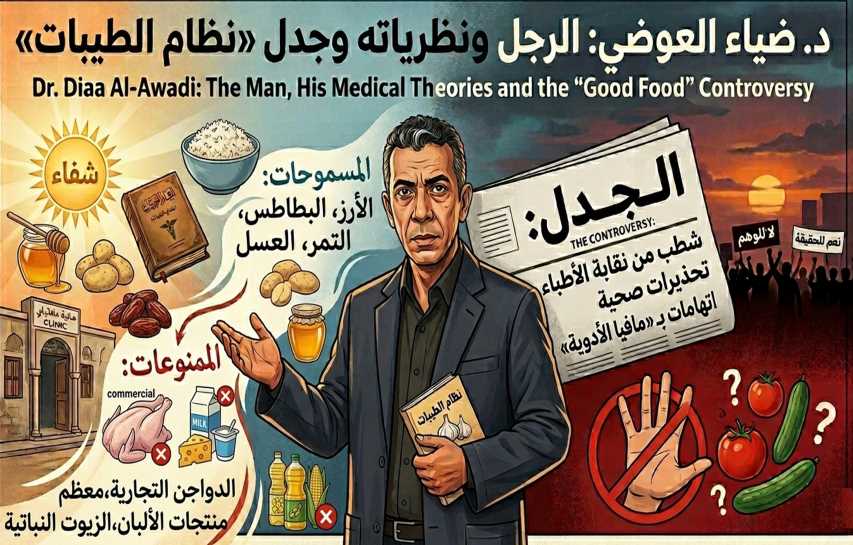
Egyptian Dr. Diaa Al Awadi: The Man, His Medical Theories and the “Good Food” Controversy
 |  |  |
 |  |  |