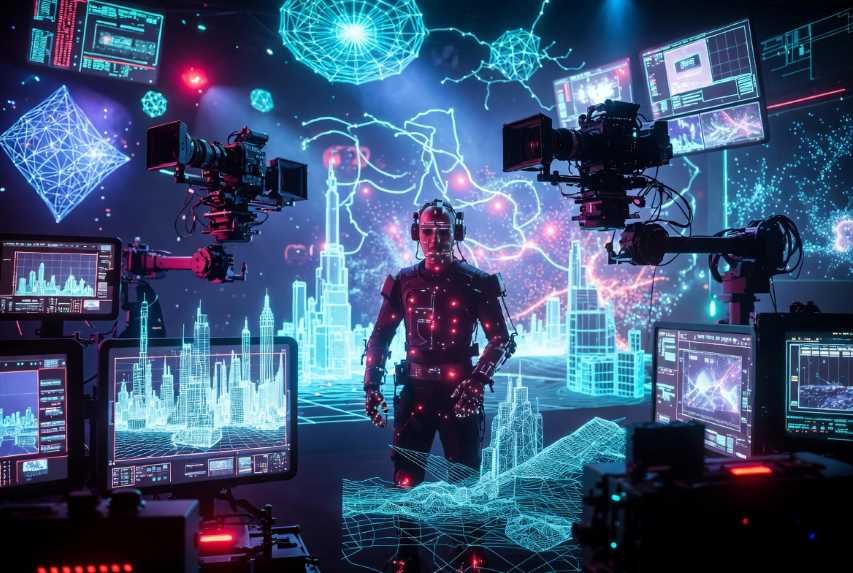
Spider-Man: Brand New Day, released in theaters on July 31, 2026, marks the fourth solo outing for Tom Holland’s Peter Parker in the Marvel Cinematic Universe. Directed by Destin Daniel Cretton and written by Chris McKenna and Erik Sommers, the film picks up years after the events of Spider-Man: No Way Home. In a world that no longer remembers Peter Parker, the young hero has dedicated himself full-time to protecting New York while grappling with isolation, evolving powers, and a new, nearly invisible threat.
The technological ambition behind Brand New Day is clear from both promotional materials and production reports: a deliberate push toward more grounded, tactile action while still delivering the spectacular set pieces audiences expect from a modern Spider-Man film. Cretton and the team, including visual effects supervisor Jerome Chen, emphasized practical stunts, wire work, and in-camera photography wherever possible, then layered sophisticated digital enhancement on top. This hybrid approach reflects a broader industry trend. Contemporary superhero films rely on advanced technology not merely for spectacle, but to solve the fundamental challenge of making the impossible feel immediate and believable on a massive scale.
Modern blockbusters depend on technology because pure practical methods cannot safely or efficiently create the physics-defying movement, city-scale environments, and character transformations that define the genre. The result is a carefully orchestrated collaboration between physical production, performance capture, CGI, real-time tools, and post-production pipelines.
Pre-Production Technology
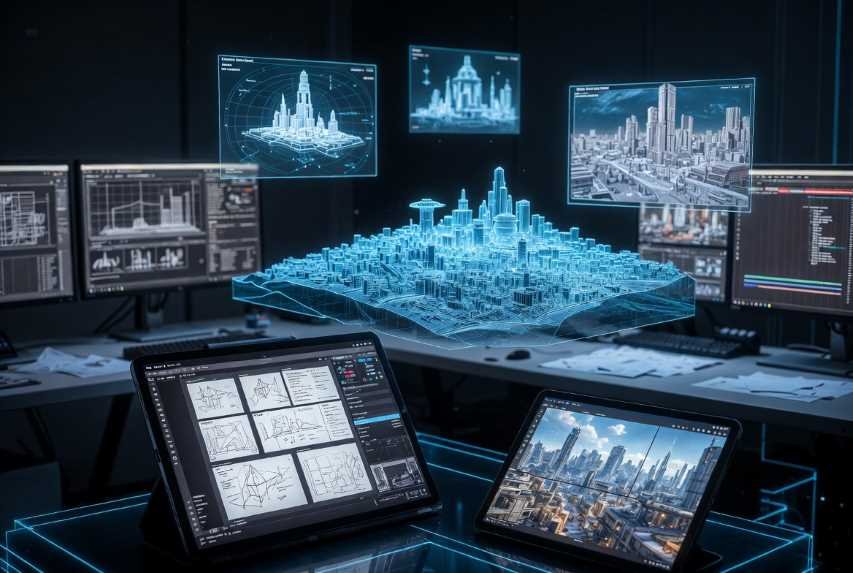
Long before cameras rolled in August 2025, the production team used digital tools to visualize the story. Script visualization and digital storyboarding allowed directors, writers, and department heads to explore pacing, camera angles, and action geography early. Concept artists generated key imagery of Spider-Man’s new look, evolving powers, and New York environments. While AI-assisted concept tools have become common across the industry for rapid iteration and style exploration, any specific use on Brand New Day remains unconfirmed in public reports and should be understood as part of general contemporary practice rather than a verified production detail.
Virtual scouting and location assessment helped the team evaluate Glasgow streets and English sites that would later stand in for New York. Previsualization (Previs) and animatics were almost certainly employed for complex action sequences, as they are standard on films of this scale. These tools let the director and cinematographer Brett Pawlak test camera moves, timing, and spatial relationships in a low-cost digital environment before committing expensive on-set resources.
Virtual Production
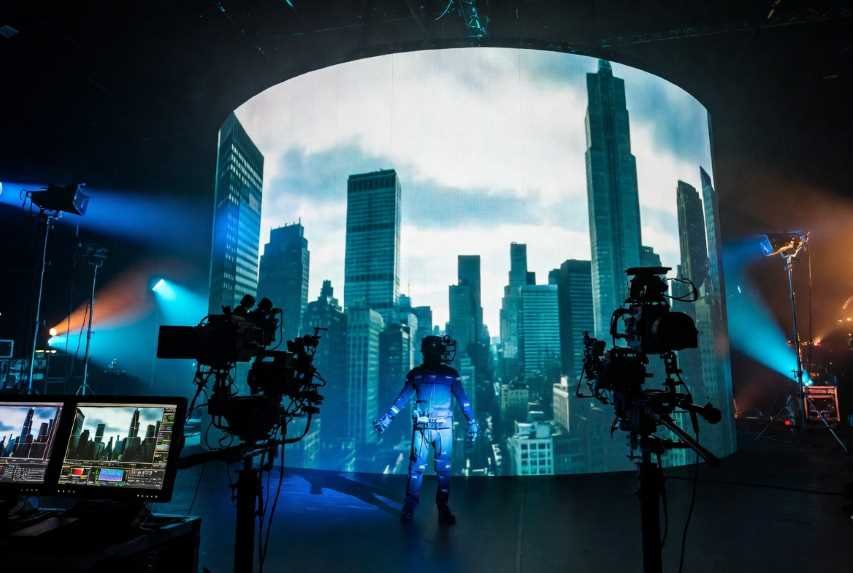
Virtual production techniques have transformed large-scale filmmaking by allowing real-time interaction between actors and digital environments. LED Volume stages, real-time rendering engines, camera tracking systems, and digital set extensions reduce the traditional disconnect between live-action performance and later CGI. On many recent superheroes films these tools improve lighting consistency and actor eyelines while shortening post-production cycles.
Public reports on Brand New Day do not confirm the extensive use of full LED Volume stages for major sequences. Filming took place primarily on practical locations in Glasgow and on built sets at Pinewood Studios, where three city-block sections of Queens were constructed. Where digital environments were required, the production most likely relied on traditional plate photography combined with later CGI augmentation—standard practice when a film prioritizes street-level realism and practical stunts. The advantages of virtual production over pure green-screen work remain relevant industry-wide: better real-time lighting reference, reduced post-production guesswork, and more natural performances.
CGI and Visual Effects (VFX)
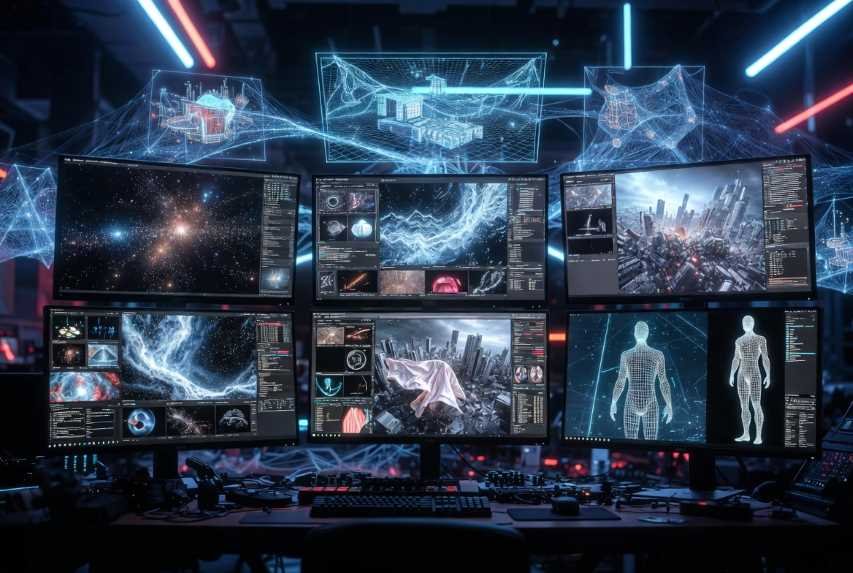
Visual effects form the backbone of any modern Spider-Man film. Supervised by Jerome Chen, with David Bosco as visual effects producer, Brand New Day’s VFX were delivered by a consortium of leading studios: Sony Pictures Imageworks, Framestore, Industrial Light & Magic (ILM), RISE, Cantina Creative, Soho VFX, and SDFX Studios.
Key elements created or enhanced digitally include:
Digital Spider-Man suits and fabric simulation for realistic stretch, wrinkles, and movement under stress.
Full or partial CGI characters, including complex villain designs and the Hulk (performance-captured from Mark Ruffalo).
Expansive city environments that blend photographed Glasgow and Pinewood sets with digital New York extensions, skyline replacements, and crowd multiplication.
Web-shooting simulations that must feel elastic, sticky, and physically grounded.
Destruction, explosions, and debris that interact convincingly with practical elements.
Fluid, particle, cloth, hair, and physics simulations that give weight and secondary motion to suits, webbing, smoke, and environmental interaction.
These techniques follow established pipelines used across recent MCU and Sony Spider-Man films. Exact shot counts and specific simulation tools for Brand New Day have not been publicly detailed as of early August 2026, so the descriptions above reflect proven industry methods rather than film-exclusive confirmations.
Motion Capture Technology
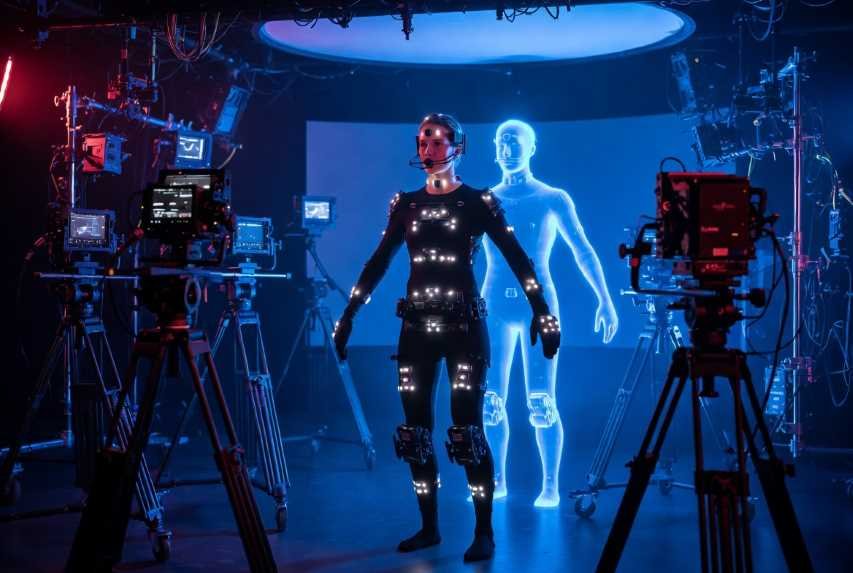
Performance capture played a clear role. Tom Holland performed many of his own stunts, but a dedicated motion-capture performer, Teifion Sussex, served as the VFX and mocap double for Spider-Man. Sussex worked on a volume stage, wearing a marker suit so that precise body mechanics could be recorded and later applied to digital doubles. Facial capture and body tracking systems recorded subtle performance data that animators refined. For the Hulk, Ruffalo’s performance was similarly captured and translated into a digital character—an approach Cretton noted created an unusual on-set dynamic for Holland.
The character animation pipeline typically moves from raw capture data through cleanup, retargeting, key-frame refinement, and final integration with cloth and physics simulations. Digital doubles replace actors in high-risk or physics-defying moments while preserving the original performance’s energy.
Artificial Intelligence in Production

AI tools are increasingly present across the film industry for concept exploration, image enhancement, animation assistance, audio cleanup, dialogue editing, color matching, upscaling, object removal, production scheduling, and asset management. These applications can accelerate repetitive tasks and expand creative options. However, no official production reports for Brand New Day have confirmed specific AI workflows. Any discussion of AI assistance on this film should therefore be understood as reflective of broader 2025–2026 industry practices rather than verified details unique to the project.
Camera Technology
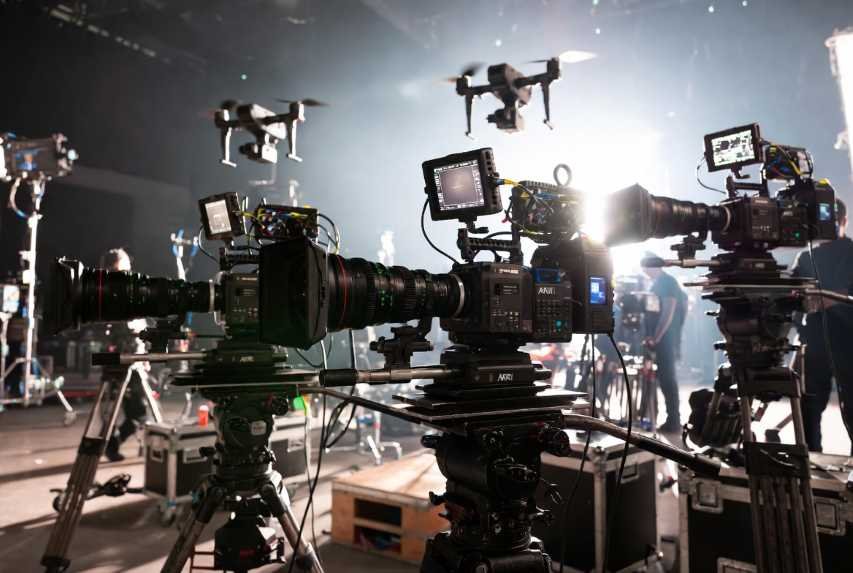
Cinematographer Brett Pawlak shot Brand New Day primarily with high-end digital cinema cameras. Confirmed systems include the Arri Alexa 265 (with Panavision Expanded Panaspeed and Primo 70 Zoom lenses), the Arri Alexa 35 (with Panavision Panaspeed and Super Speed MKII lenses), and the Sony CineAlta Venice 2 (with custom Panavision macro lenses for selected shots). Source formats reached 6.5K ARRIRAW and higher, with a 4K digital intermediate finished at Company 3.
The production also filmed specific sequences at an extraordinary 420 frames per second. These ultra-high-frame-rate shots were used to recreate iconic comic-book cover poses in extreme slow motion. Holland’s precise body control allowed him to hit difficult mid-air poses in only a few takes despite the technical demands of acting at that speed. The film was further prepared for multiple theatrical formats, including sequences specifically designed for ScreenX panoramic presentation.
Additional camera systems common to films of this scale—drone cinematography, cable cameras, robotic heads, and advanced stabilization—would have supported dynamic swinging and chase sequences, though exact usage on Brand New Day is not fully detailed in public sources.
Spider-Man Swinging Technology
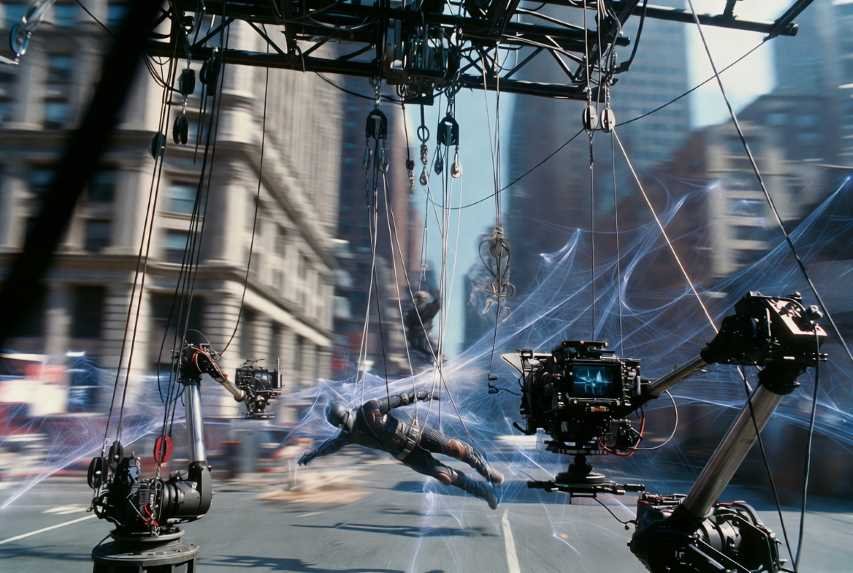
Swinging sequences remain the visual signature of any Spider-Man film. Brand New Day placed strong emphasis on practical methods. Stunt performers and Holland himself worked with extensive wire rigs on Glasgow streets and Pinewood sets. Real wire work, combined with motion-control camera moves and careful choreography, provided authentic weight and trajectory. CGI then extended webs, removed safety equipment, added digital environments, and synchronized physics simulations so that the final image felt continuous and gravity-defying.
This hybrid approach—practical performance plus digital completion—addresses the classic challenge that pure wire work can look limited, while pure CGI can feel weightless. Camera movement was synchronized with the performer’s arc so that the audience experiences the speed and height of each swing.
Practical Effects
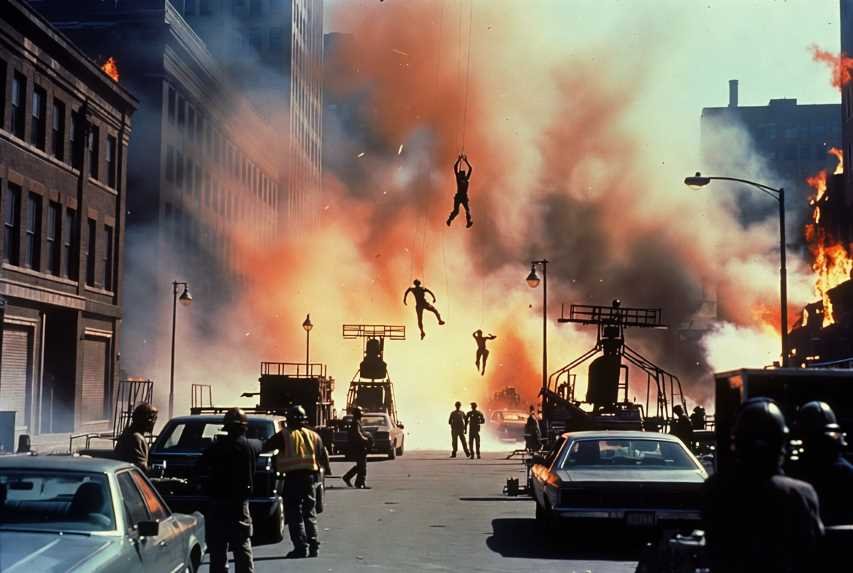
Production materials and behind-the-scenes featurettes stress the film’s commitment to practical work. The opening action sequence was shot on public streets with real vehicles, controlled explosions, and in-camera stunts performed in front of large crowds. Wire rigs, mechanical effects, practical props, makeup, and on-set lighting all contributed to a tactile foundation. Built sets at Pinewood provided physical rooftops and street sections that actors and stunt teams could interact with directly.
Practical stunts were coordinated by Peng Zhang (known for work with the Jackie Chan Stunt Team). This emphasis on real-world action aligns with Holland’s stated preference, influenced by his experience on Christopher Nolan’s The Odyssey, for prepared, efficient shooting days that prioritize what can be captured in camera.
Sound Technology
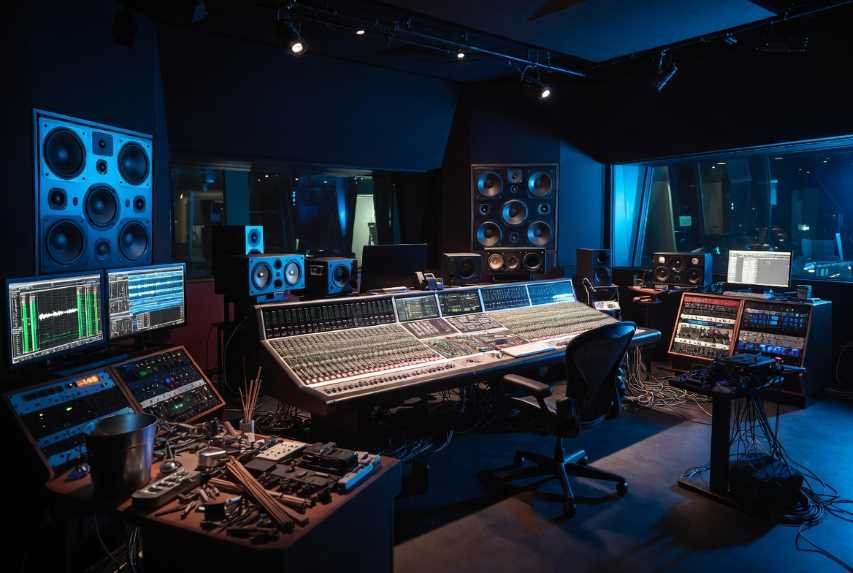
The film was released in Dolby Atmos, enabling precise object-based spatial audio. Sound design, Foley recording, ADR (automated dialogue replacement), voice processing, and environmental audio layers create the sonic texture of New York streets, web impacts, suit movement, and large-scale action. Immersive mixing places the audience inside the action—whether hearing the stretch of webbing or the chaos of a street chase. These techniques follow current theatrical standards for major studio releases.
Music Production
Michael Giacchino returned as composer, continuing his work from the previous three Tom Holland Spider-Man films. Modern scoring for films of this scale typically combines live orchestra recording with digital instruments and hybrid techniques. Synchronization to picture, temp-track refinement, and final mastering ensure the score supports both intimate character moments and high-energy set pieces.
Editing Technology
Editing was handled by Nat Sanders, Gina Sansom, and Harry Yoon. Non-linear digital editing systems allow flexible rearrangement of complex action and dramatic scenes. Color grading and HDR mastering at Company 3 refined the final look. Scene compositing integrates live-action plates with CGI elements before final rendering and delivery in multiple theatrical formats.
Rendering Technology

Large-scale CGI requires substantial computational power. Render farms, GPU-accelerated rendering, cloud resources, ray tracing, global illumination, and physically based rendering (PBR) are standard tools for achieving photorealistic lighting, reflections, and material response. Exact configurations used by the VFX vendors on Brand New Day have not been disclosed, but these technologies represent the current baseline for films of this complexity.
Software Commonly Used in Modern Superhero Films
Contemporary VFX pipelines rely on a well-established suite of tools. The following table summarizes typical roles; specific software choices for Brand New Day itself remain unconfirmed beyond industry norms.
Software | Primary Purpose |
|---|---|
Autodesk Maya | Modeling, rigging, character animation, matchmoving |
Blender | Modeling, animation, and increasingly full pipelines |
Houdini | Procedural effects, destruction, fluids, particles |
Unreal Engine | Real-time visualization, virtual production, previs |
Nuke | Compositing and final image assembly |
Adobe After Effects | Motion graphics and secondary compositing |
DaVinci Resolve | Color grading and finishing |
Adobe Premiere Pro | Editorial and some finishing workflows |
Substance 3D Painter | Texture and material creation |
ZBrush | High-resolution digital sculpting |
Marvelous Designer | Realistic cloth and garment simulation |
These tools are routinely combined in multi-vendor pipelines such as the one used on Brand New Day.
Cybersecurity During Production
Protecting unreleased footage, digital assets, and scripts is a major priority on high-profile films. Standard industry measures include secure file transfer, access controls, digital watermarking, encrypted collaboration platforms, and physical security on sets and at post facilities. Specific protocols employed by Sony and Marvel for Brand New Day have not been publicly detailed, but the scale of the production would have required robust safeguards against leaks.
Challenges Faced by the Technical Team
Teams working on films of this scope routinely confront massive CGI shot volumes, the need for photorealistic character animation, long rendering times, enormous storage requirements, multi-studio collaboration across time zones, and constant performance optimization. Balancing the desire for practical authenticity with the necessity of digital augmentation adds another layer of complexity. Cretton’s production reportedly prioritized clear daily plans and practical methods to keep the process efficient despite these pressures.
Future of Superhero Filmmaking

Emerging technologies continue to reshape the field. AI-assisted VFX generation, real-time CGI, neural rendering, digital humans, volumetric capture, generative tools, and cloud-based collaborative production are already influencing pipelines. Virtual actors and more sophisticated performance-driven digital doubles may further blur the line between live performance and synthetic characters. Brand New Day sits at a transitional moment: it leans into practical craft while still relying on the full power of contemporary digital tools.
Interesting Facts
Sequences designed to evoke classic comic-book covers were filmed at 420 frames per second, requiring exceptional physical control from Tom Holland.
The production built three full city-block sections of Queens on the Pinewood backlot so that actors and stunt teams could work on real rooftops and streets.
Glasgow streets doubled for New York during major action, with thousands of onlookers watching practical stunts and explosions in real time.
A dedicated motion-capture performer recorded Spider-Man’s physicality on a volume stage while Holland performed many of the on-camera stunts himself.
Brand New Day is the first feature film to have sequences specifically captured for the ScreenX panoramic format.
Visual effects supervisor Jerome Chen previously oversaw effects on the Andrew Garfield Amazing Spider-Man films, bringing deep experience with web-slinging animation to the project.
These details illustrate how technology and practical craftsmanship continue to evolve together in service of storytelling.
Frequently Asked Questions (FAQ)
Was Spider-Man: Brand New Day filmed mostly with CGI? No. Production materials emphasize a stronger practical foundation than many recent entries, with extensive wire work, real explosions, and in-camera stunts, especially in the opening action sequence. CGI remains essential for webs, environments, and high-risk moments.
Which cameras were used? Primary cameras included the Arri Alexa 265, Arri Alexa 35, and Sony Venice 2, paired with Panavision lenses. Selected sequences were captured at 420 frames per second.
Who supervised the visual effects? Jerome Chen served as visual effects supervisor, with David Bosco as visual effects producer. Multiple major vendors contributed.
Did Tom Holland do his own stunts? Holland performed a significant number of his own stunts. A motion-capture double, Teifion Sussex, handled additional performance-capture work for digital doubles.
How were the swinging scenes created? A hybrid method combined practical wire rigs and stunt performers with CGI web simulation, digital environments, and physics matching.
Was virtual production (LED volumes) heavily used? Public reports focus on practical locations and built sets rather than extensive LED Volume stages. Traditional plate photography and digital extension appear to have been the primary approach.
What frame rate was used for the comic-book-style shots? 420 frames per second, allowing extreme slow-motion recreation of iconic poses.
Which studios handled the VFX? Sony Pictures Imageworks, Framestore, ILM, RISE, Cantina Creative, Soho VFX, and SDFX Studios.
Was AI used in production? AI tools are common across the industry for various tasks, but no specific AI applications have been officially confirmed for Brand New Day.
How was the Hulk created? Through performance capture of Mark Ruffalo combined with CGI, consistent with recent MCU practice.
What sound format was used? Dolby Atmos for immersive spatial audio.
Who composed the score? Michael Giacchino, returning from the previous three films.
Where was the film primarily shot? Glasgow, Scotland (standing in for New York action), Pinewood Studios in England (built sets), and additional English locations.
Were practical explosions used? Yes. Behind-the-scenes materials show controlled real explosions integrated into street-level action sequences.
Is Brand New Day the first film shot for ScreenX? It is the first film to have particular sequences specifically captured for the ScreenX panoramic format.
How long was principal photography? Approximately August to mid-December 2025.
What role did previsualization play? Previs and related digital planning tools are standard for complex action and were almost certainly used, though exact details remain internal.
How are digital suits made to look realistic? Through high-resolution scanning or modeling, cloth simulation, material shading, and careful lighting match to on-set photography.
Spider-Man: Brand New Day demonstrates how cutting-edge technologies—from high-frame-rate cinematography and sophisticated motion capture to advanced CGI simulation, practical stunt engineering, immersive sound, and multi-vendor rendering pipelines—combine with deliberate practical craftsmanship. The film’s technical team balanced real-world performance and physical sets with digital tools that extend the possible, creating a cinematic experience that feels both spectacular and grounded. As superhero filmmaking continues to evolve, Brand New Day stands as a current example of how technology serves story: amplifying emotion, heightening action, and keeping audiences suspended in the thrill of web-slinging across a living city.
 |  |  |
 |  |  |