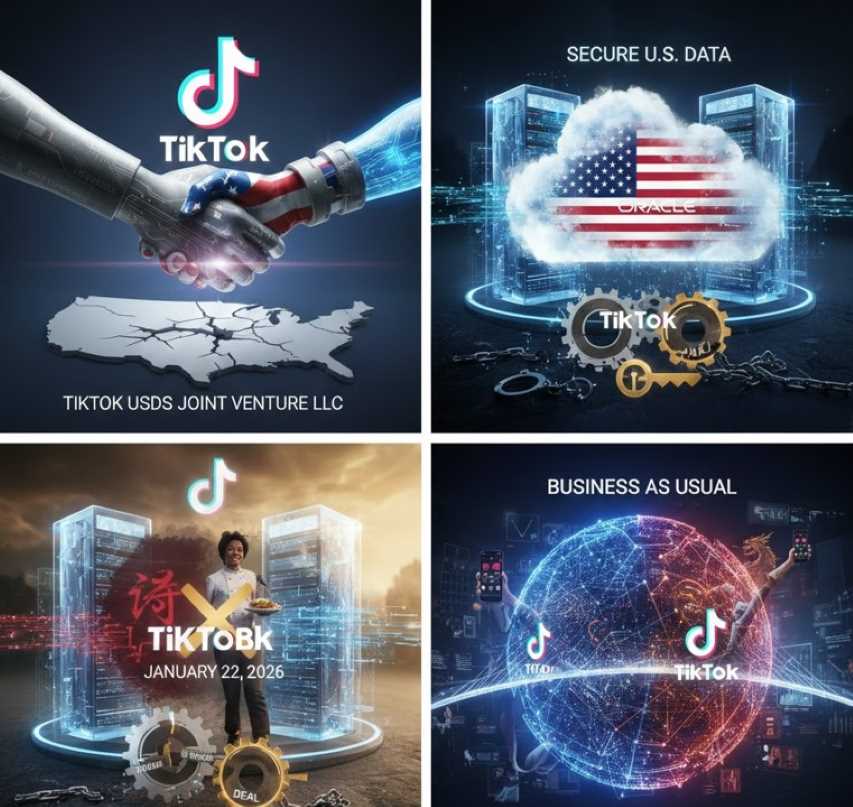
In a dramatic turn of events that concludes years of legal battles and political maneuvering, TikTok has successfully avoided a nationwide ban in the United States by finalizing a deal to divest its American operations. The agreement, signed earlier this month, creates a new joint venture primarily controlled by United States-based investors, addressing long-standing national security concerns raised by lawmakers and the executive branch. This move ensures that over 170 million American users can continue enjoying the popular short-form video application without interruption, marking a significant victory for the platform amid escalating United States-China technology tensions.
Background: A Prolonged Saga of Threats and Delays
The threat of a TikTok ban in the United States has loomed since 2020, when President Donald Trump first issued executive orders citing national security risks due to the application's ownership by Chinese technology giant ByteDance. Concerns centered on potential data access by the Chinese government and the risk of content manipulation through the application's algorithm. These fears intensified in 2024 with the passage of bipartisan legislation requiring ByteDance to divest at least 80 percent of its United States assets to non-Chinese entities or face a complete prohibition.
The Supreme Court upheld the law in January 2025, but enforcement was repeatedly delayed to allow negotiations. Deadlines were extended multiple times—most recently from December 16, 2025, to January 22, 2026—giving ByteDance and potential buyers time to finalize a deal. President Trump, who has been a vocal critic of TikTok's Chinese ties, personally backed the agreement, emphasizing it as a way to protect American users while preserving the application's economic value.
Without this resolution, TikTok faced a potential shutdown as early as mid-January 2026, which could have disrupted content creators, businesses, and everyday users reliant on the platform for entertainment, marketing, and social connection.
Details of the Landmark Deal
The agreement, announced on December 18, 2025, involves spinning off TikTok's United States operations into a new entity called TikTok United States Data Security Joint Venture Limited Liability Company, valued at approximately $14 billion. The joint venture will be majority-owned by a consortium of investors, with ownership structured as follows:
Ownership Stake | Entity | Role/Description |
|---|---|---|
| 50 percent | American-led Investor Group | Includes Oracle, Silver Lake, and MGX; Oracle will secure United States user data. |
| Over 30 percent | Existing ByteDance Investor Affiliates | United States-based funds with prior stakes in ByteDance. |
| 19.9 percent | ByteDance | Retained minority interest without operational control. |
Under these terms, the new United States entity will handle critical functions such as data storage, algorithm training, and content moderation for American users. Oracle will store all United States user data in a secure cloud environment and retrain the content recommendation algorithm exclusively on domestic data to prevent any external influence. This setup aims to isolate United States operations from ByteDance's global influence, with independent audits to verify compliance with national security standards.
Meanwhile, ByteDance will continue managing global aspects of TikTok, including electronic commerce, advertising, and marketing, while ensuring interoperability with the United States platform. The deal requires final approvals from United States regulators, including the Committee on Foreign Investment in the United States, as well as clearance from Chinese authorities. It is expected to close by January 22, 2026.
Implications for Users and the Technology Landscape
For TikTok's vast United States user base, the deal means business as usual—at least on the surface. Users will retain access to the application's global content library, allowing them to continue discovering a world of endless possibilities as part of a vital global community. Behind the scenes, enhanced data protections and United States-centric moderation could lead to subtle changes in content recommendations and policy enforcement, potentially making the experience more tailored to American audiences.
From a national security perspective, the spin-off alleviates fears of data breaches or propaganda, as United States operations will be firewalled from Chinese oversight. Critics, however, argue that ByteDance's retained stake could still pose risks, and some lawmakers have called for congressional review of the full deal terms.
Economically, the agreement preserves jobs and revenue tied to TikTok, which supports thousands of creators and small businesses. It also sets a precedent for handling foreign-owned technology platforms, potentially influencing future deals involving companies like WeChat or other Chinese applications.
Reactions and Future Outlook
TikTok's leadership celebrated the deal as a "milestone" in resolving the impasse. Chief Executive Officer Shou Chew emphasized its benefits for users, while ByteDance expressed commitment to compliance. On the Chinese side, a foreign ministry spokesperson reiterated China's consistent position on the issue, deferring to relevant authorities without explicit endorsement or opposition.
President Trump hailed the agreement as a "great deal for America," crediting it with protecting national interests while avoiding a disruptive ban. However, the deal's success hinges on timely approvals; any delays from Beijing could reignite ban threats. As the January deadline approaches, all eyes are on the finalization process. For now, TikTok lives on in the United States, a testament to the complex interplay of technology, geopolitics, and commerce in the digital age.
 |  |  |
 |  |  |