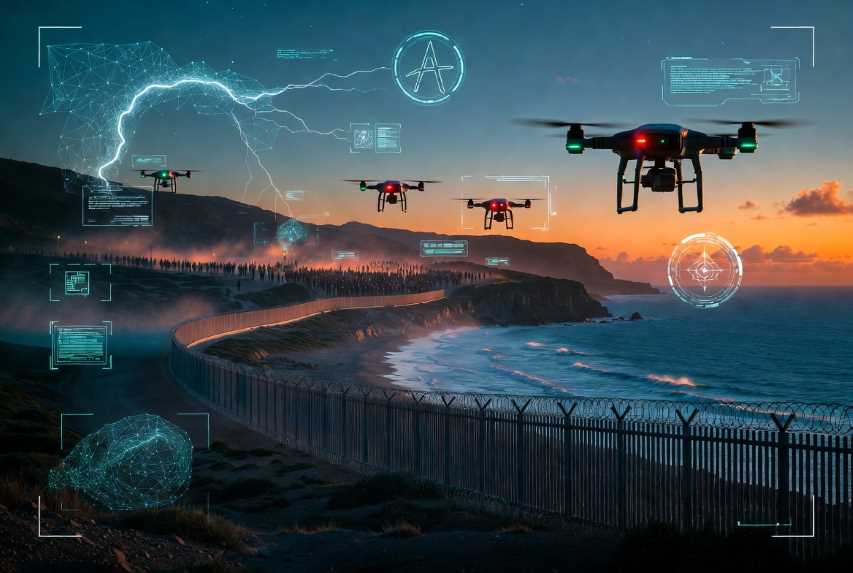
In late July 2026, an unprecedented surge of migrants crossed from Morocco into the Spanish autonomous city of Ceuta. Over Thursday and Friday, estimates ranged from 50,000 to as many as 60,000 people—predominantly young Moroccan men and adolescents—entered the territory by land and sea. The influx, equivalent to roughly 60–70 percent of Ceuta’s resident population, overwhelmed local capacity, resulted in at least 57 confirmed deaths on the Spanish side, and triggered rapid political and security responses from Spain, Morocco, and the European Union.
The event drew intense international attention because of its scale, the speed of the crossings, the visible chaos in a small European territory on African soil, and the subsequent voluntary return of the large majority of arrivals within hours. It highlighted longstanding tensions at one of the European Union’s only land borders with Africa and reignited debates about migration management, bilateral cooperation, and the limits of physical and technological barriers.
Ceuta’s strategic importance stems from its location at the entrance to the Strait of Gibraltar, its status as Spanish and EU territory, and its dual role as both a legitimate commercial and transport hub and a persistent pressure point for irregular migration. The crisis underscored how economic desperation, rapid information flows via social media, legal developments, and border enforcement dynamics can converge to produce sudden, large-scale movements.
Key Takeaways
An estimated 50,000–60,000 people crossed into Ceuta on 30–31 July 2026.
At least 57 people died, mainly by drowning or crushing.
Roughly 48,300 had returned to Morocco by the evening of 31 July.
The event dwarfed the previous major surge of approximately 8,000–10,000 in May 2021.
What is Ceuta?
Ceuta is a Spanish autonomous city located on the northern coast of Africa, on a peninsula that juts into the Mediterranean Sea near the Strait of Gibraltar. It covers approximately 18.5–19 square kilometers and has a resident population of roughly 83,000 to 85,000 people. The city is bordered on land by Morocco and surrounded on three sides by water.
Politically, Ceuta is an integral part of Spain and of the European Union, though it maintains a special customs and fiscal regime and does not form part of the EU customs territory in the same way as mainland Spain. Along with Melilla further east, it constitutes one of only two land borders between the European Union and the African continent. Morocco does not recognise Spanish sovereignty over Ceuta or Melilla and regards them as occupied territory.
Historically, the site has been contested for centuries. It came under Portuguese control in the early 15th century and passed to Spanish sovereignty in the late 16th and 17th centuries, formally confirmed by the 1668 Treaty of Lisbon. Continuous Spanish administration long predates the independence of modern Morocco in 1956. The city features a mixed population of Christian and Muslim residents and serves as both a military and commercial outpost.
Its geographic position makes it a natural gateway for people seeking entry into the Schengen Area and the broader European labor market. The short distance from Moroccan towns such as Fnideq (Castillejos) and Belyounech, combined with the presence of a maritime breakwater at Tarajal that can be swam around, has repeatedly made it a focal point for irregular crossings.
Timeline of Events
On Thursday 30 July 2026, large groups of people began crossing the land border and swimming around the maritime perimeter into Ceuta. Spanish authorities reported continuous arrivals through the night and into Friday. Estimates of the total number of entrants ranged from around 50,000 (Spanish Interior Ministry) to as high as 60,000 (Ceuta local government).
Main crossing points included sections of the border fence and, critically, the sea approaches near the Tarajal breakwater and other coastal stretches. Many swam several kilometers from the Moroccan side, some using improvised flotation devices or wetsuits.
Moroccan security forces eventually reinforced the frontier with water cannons, batons, and tear gas to prevent further crossings. Spanish authorities deployed additional National Police, Civil Guard units, and military personnel. Emergency measures included the mobilisation of troops, increased maritime patrols, diving teams, and the establishment of temporary reception and return procedures.
By the evening of Friday 31 July, Spanish officials stated that approximately 48,300 people had already returned to Morocco, many voluntarily after finding limited food, shelter, or prospects of remaining. The death toll on the Spanish side stood at 57, with some drowned and others crushed while attempting to climb the breakwater or navigate crowded approaches. Additional casualties on the Moroccan side remained unconfirmed in early reports.
Why Did So Many Migrants Attempt the Crossing?
Multiple interlocking factors contributed to the scale and suddenness of the movement.
Economic hardship and high youth unemployment in Morocco formed the underlying pressure. Official and independent figures indicate youth unemployment rates in the mid-to-high 30 percent range, with many young people facing limited formal job opportunities, informal-sector work, and constrained social mobility. Poverty and uneven regional development further reinforced the desire to seek better prospects in Europe.
A recent Spanish Supreme Court ruling (late June 2026) restricted the use of immediate “hot returns” for migrants intercepted at sea while attempting to reach Ceuta or Melilla. Trafficking networks and social media amplified interpretations of this ruling, creating the perception—often inaccurate—that sea arrivals could not be promptly returned. Viral videos of successful crossings circulated rapidly on platforms such as Instagram, encouraging others to attempt the journey.
Climate-related stresses, including recurrent drought affecting rural livelihoods, and broader political and social frustrations also played roles. Human smuggling and trafficking organizations exploited the moment, while the timing coincided with a Moroccan public holiday that may have reduced normal enforcement intensity. Some reports suggested temporary reductions in Moroccan border pressure contributed to the volume of arrivals, though official statements emphasized subsequent cooperation.
Social media coordination allowed rapid mobilization over large distances. Young people travelling from inland areas learned of openings and moved quickly toward the border.
Humanitarian Perspective
Migrants faced significant risks during the crossings. Swimming in coastal waters carried dangers of drowning, exhaustion, hypothermia, and injury from rocks or currents. Land crossings involved climbing or forcing barriers under crowded conditions, leading to crushing injuries and stampede risks. At least 57 deaths were recorded on the Spanish side.
Reception facilities in Ceuta, including the Temporary Immigrant Reception Centre (CETI), were rapidly overwhelmed. Many people, including unaccompanied minors, slept in parks, streets, or open areas. Medical teams and emergency services provided assistance for dehydration, trauma, and exposure.
International humanitarian concerns focused on the vulnerability of children and adolescents, the rapid nature of the movement, and the conditions of return. Human rights considerations included the need for individual assessment, protection of minors, access to asylum procedures where applicable, and the principle of non-refoulement. Most returns occurred voluntarily amid the practical impossibility of sustaining large numbers in the small territory, though the speed of the reverse movement raised questions about due process for those who might have wished to claim protection.
Border Security Challenges
Ceuta’s land border is secured by a multi-layered fence system—typically a double fence reaching 6 meters or higher in critical sections, topped with anti-climbing elements, concertina wire, and monitoring equipment. Underground sensors detect vibration and cutting attempts. Motion detectors, acoustic sensors, and extensive CCTV networks feed into central command posts.
Despite these measures, the maritime perimeter, particularly around the Tarajal breakwater, remains a structural vulnerability because it can be circumvented by swimming. Maritime patrols by the Civil Guard, maritime rescue services, and Moroccan counterparts form a second line of defense, supported by radar and vessel tracking.
Police and military coordination intensify during surges, yet large, simultaneous land and sea approaches can saturate response capacity. Identification procedures rely on biometric systems where available, document checks, and interviews. Deportation and readmission face practical and legal constraints, including bilateral agreements with Morocco, capacity limits, and judicial requirements for individualised assessments following the Supreme Court ruling.
The Role of Technology
Modern technology plays a central and expanding role in both enabling and managing migration flows at borders such as Ceuta.
Surveillance Technologies
AI-powered cameras, facial recognition systems, thermal imaging, night-vision devices, motion and vibration sensors, acoustic detectors, and ground-based radar form layered monitoring networks. Smart border systems integrate these inputs for real-time alerts. In Ceuta and Melilla, Spanish authorities have progressively upgraded thermal cameras, CCTV, and perimeter sensors. Fixed and mobile thermal units, laser illuminators, and intelligent video analytics help detect movement in low visibility.
Drones
Unmanned aerial vehicles (UAVs) operated by the Civil Guard and other forces provide persistent surveillance, live video feeds, and long-range observation. Infrared-equipped drones extend night coverage. Autonomous or semi-autonomous systems can patrol predefined routes and reduce the need for continuous human presence in exposed positions. Drones have become standard for monitoring both land fences and coastal approaches.
Satellites
Earth-observation satellites and commercial imagery support broader monitoring of migration routes, coastal activity, and weather conditions that affect sea crossings. Maritime domain awareness systems combine satellite data with other sensors.
Artificial Intelligence
AI applications include predictive analytics for potential migration pressure, crowd-density analysis from video feeds, pattern recognition of repeated routes or behaviors, risk scoring, and decision-support tools for resource allocation. Big-data platforms integrate historical crossing data, social-media indicators, and weather information. Machine-learning models help priorities alerts from sensor networks.
Digital Communications
Smartphones, GPS applications, messaging platforms, and social media enable migrants to coordinate, share real-time information about openings or conditions, and navigate. Digital payment systems and internet access facilitate organization. These same tools can also be monitored or disrupted under certain legal frameworks.
Biometric Technologies
Fingerprint scanners, iris recognition, facial recognition, and automated border gates support identity verification and the Entry/Exit System. Digital identity checks help detect document fraud and track previous entries.
Maritime Technologies
Coast Guard and Civil Guard radar, Automatic Identification System (AIS) vessel tracking, smart buoys, and coordinated rescue systems support both interdiction and search-and-rescue. Emergency communication networks link vessels and shore stations.
Cybersecurity
Protecting border databases, biometric repositories, and inter-agency information-sharing platforms is essential. Secure international data exchange underpins cooperation while raising questions of data protection and access controls.
Emerging Technologies
Machine learning, Internet of Things sensor networks, edge computing for on-site processing, autonomous ground vehicles, robotics for inspection, and digital-twin models of border infrastructure represent the next wave of capability. Predictive analytics aim to anticipate pressure points before surges materialize.
Technology Spotlight the Spanish Integrated External Surveillance System (SIVE) and related upgrades incorporate AI, high-resolution cameras, and 3D radar. Investments in the tens of millions of euros have targeted improved detection along the Strait of Gibraltar approaches, including Ceuta. Thermal and electro-optical sensors paired with drones form a core element of current perimeter awareness.
Ethical Issues
Widespread surveillance raises privacy concerns for residents and legitimate cross-border travellers. Facial-recognition systems can embed algorithmic bias. Data-protection rules under European law constrain retention and sharing. Human-rights advocates emphasise that technology must support, not replace, individual assessment and that disproportionate monitoring can affect civil liberties. Responsible deployment requires transparency, oversight, and safeguards against misuse.
Spain’s Response
Spanish authorities reinforced security with additional police, Civil Guard, and military units, including diving teams and maritime assets. Political leaders described the surge as a violation of territorial integrity and attributed significant responsibility to trafficking networks exploiting the court ruling. Cooperation with Morocco was publicly emphasised for returns and prevention of further crossings. The European Union offered Frontex support. Temporary measures included increased presence and plans for physical maritime markers such as buoys.
Morocco’s Response
Moroccan forces eventually intensified control at the frontier, using crowd-control measures to stem further attempts. Official engagement focused on coordination with Spain for the return of those who had crossed and on broader border management. Statements and actions reflected the existing bilateral framework of migration cooperation, which has included joint operations and capacity support in previous years.
European Union Perspective
The EU’s migration and asylum framework combines external border management, returns, legal pathways, and partnerships with third countries. Frontex provides operational support, including officers, equipment, and coordination. Financial instruments fund border infrastructure, surveillance systems, and capacity-building in partner states. The Ceuta events reinforced discussions about the resilience of external borders, the effectiveness of technological investments, and the need for coherent future strategies that address root causes alongside enforcement. Climate-related mobility is increasingly factored into longer-term planning.
Economic Impact
For Spain and Ceuta, the immediate costs included emergency deployments, medical care, temporary reception, and overtime for security forces. Local businesses and tourism faced short-term disruption from street congestion and security measures. Cross-border trade and daily commuting patterns were affected. Morocco experiences both the economic pressures that drive emigration and the costs of intensified border policing. Longer-term government spending on infrastructure and technology rises after such events. Border economies that rely on formal and informal cross-border activity can suffer temporary shocks.
Social Impact
Public opinion in Ceuta and mainland Spain reflected concern over capacity strain, security, and the visible scale of the influx. Integration challenges for any residual population would involve education, healthcare, housing, and labour-market access. The high proportion of young people among arrivals highlights potential pressures on youth services and employment systems. Social cohesion in a small, already dense territory can be tested by rapid demographic fluctuations.
Future Outlook
Migration pressure toward Europe is expected to persist, driven by demographic, economic, and climate factors in origin regions. Technology will continue to advance toward more predictive, integrated, and autonomous systems. AI-driven border management, expanded drone and sensor networks, and improved data-sharing offer greater situational awareness, yet physical barriers and human enforcement remain essential. International cooperation between Spain, Morocco, and the EU will be critical. Climate migration may increase the frequency or intensity of movements, requiring adaptive strategies that combine deterrence, legal pathways, and development cooperation.
Case Studies
U.S.–Mexico border Extensive fencing, sensors, cameras, drones, and AI analytics are deployed along a much longer frontier. Technology has improved detection rates but has not eliminated crossings; root economic and security drivers continue to generate pressure. Large surges still occur despite high investment.
Greece–Turkey border The Evros land border and Aegean maritime routes feature fencing, surveillance, and Frontex operations. Pushbacks and technology have reduced some flows, yet political tensions and geographic proximity sustain pressure. Comparisons highlight the role of third-country cooperation.
Italy–Libya migration route Primarily maritime, this corridor relies on naval assets, aerial surveillance, and agreements with Libyan authorities. High death rates at sea and fluctuating political arrangements illustrate the limits of technology without stable partnerships.
Poland–Belarus border Hybrid pressure in 2021 involved state-facilitated movements met with rapid fence construction, sensors, and military reinforcement. Technology and physical barriers contained the flow, but the episode demonstrated how geopolitical instrumentalization can generate sudden crises.
These cases show that technology enhances detection and response yet cannot fully substitute for political cooperation, legal frameworks, and addressing underlying drivers.
Key Statistics
Indicator | Figure / Estimate |
|---|---|
| Estimated arrivals (30–31 July) | 50,000–60,000 |
| Returns by evening of 31 July | ~48,300 |
| Confirmed deaths (Spanish side) | At least 57 |
| Ceuta resident population | ~83,000–85,000 |
| Ceuta land area | ~18.5–19 km² |
| Previous major surge (2021) | ~8,000–10,000 |
| Border fence characteristics | Double fence, up to 6–10 m in places, sensors, cameras |
| Technology elements | Thermal cameras, drones, CCTV, motion/acoustic sensors, SIVE upgrades with AI and radar |
Exact annual migration figures fluctuate; irregular arrivals to Spain overall had declined in the year prior to the surge due to enhanced bilateral cooperation.
Advantages and Challenges of Technology
Aspect | Benefits | Limitations / Challenges |
|---|---|---|
| Detection | Early warning, 24/7 coverage, reduced blind spots | Weather, terrain, and deliberate countermeasures can degrade performance |
| Resource allocation | Predictive analytics optimize deployment | High acquisition and maintenance costs |
| Identification | Biometrics speed processing and reduce fraud | Privacy, data protection, and potential bias |
| Cost | Long-term efficiency gains possible | Significant upfront investment; ongoing upgrades |
| Effectiveness | Higher interdiction rates in controlled scenarios | Cannot stop determined mass movements alone |
| Future potential | AI, autonomy, and integration improve capability | Ethical oversight, legal constraints, and public acceptance required |
Technology multiplies the effectiveness of personnel but remains dependent on human decision-making, legal frameworks, and political will.
Frequently Asked Questions (FAQ)
Why is Ceuta part of Spain? Ceuta has been under continuous Spanish administration since the late 16th/17th century, formalized in 1668, long before the modern Moroccan state.
Why do migrants choose Ceuta? It is Spanish and EU territory reachable by land or a relatively short swim from Moroccan towns, offering a potential entry point into Europe.
How does AI help border security? AI supports video analytics, predictive modelling of routes and pressure, automated alerts from sensor networks, and decision-support systems.
What technologies monitor borders? Thermal and optical cameras, motion and vibration sensors, drones, radar, acoustic detectors, and integrated command systems.
What is the role of drones? They provide real-time aerial surveillance, night operations with infrared, and flexible coverage of land and coastal zones.
How are migrants identified? Through biometric systems (fingerprints, facial recognition), document checks, interviews, and database queries where available.
What caused the 2026 surge? A combination of economic pressures, social-media amplification of a court ruling, possible temporary enforcement gaps, and trafficking networks.
Were most migrants returned? Yes; the large majority returned to Morocco within roughly 24–36 hours, many voluntarily.
What is the Supreme Court ruling’s relevance? It restricted immediate summary returns for certain sea arrivals, creating a perceived legal opening that was widely circulated online.
How does Spain cooperate with Morocco? Through bilateral agreements on readmission, joint patrols, information sharing, and capacity support.
What is Frontex’s role? The EU border agency provides operational assistance, officers, equipment, and coordination support upon request.
Are children among the arrivals? Yes; unaccompanied minors formed a notable portion and required specialized protection responses.
Can technology stop all crossings? No; it improves detection and response but does not eliminate underlying drivers or determined mass movements.
What ethical concerns arise? Privacy, potential algorithmic bias, data security, and the balance between security and human rights.
Will similar events recur? Pressure is likely to continue; the frequency and scale depend on economic conditions, enforcement consistency, legal developments, and information flows.
The July 2026 crossings into Ceuta were driven primarily by economic hardship and youth unemployment in Morocco, amplified by rapid social-media circulation of information about a Spanish court ruling and facilitated by temporary conditions at the border. The humanitarian cost was real, with dozens of deaths and temporary overwhelm of a small territory’s capacity. Spain and Morocco demonstrated the capacity for rapid operational cooperation that enabled most people to return within a short period.
Technology—ranging from sensors and drones to AI analytics and biometrics—has become indispensable for situational awareness and response. It multiplies the reach of limited personnel and provides tools for prediction and management. Yet technology alone cannot resolve the structural drivers of migration or replace the need for political cooperation, legal clarity, and balanced humanitarian consideration.
Future challenges include climate-influenced mobility, evolving trafficking tactics, and the ethical governance of increasingly powerful surveillance systems. Opportunities lie in smarter, more integrated border management, deeper bilateral and EU partnerships, and policies that address root causes while maintaining the integrity of external borders. The Ceuta events of 2026 serve as a stark illustration of both the vulnerabilities and the adaptive capacities of contemporary European border governance.
 |  |  |
 |  |  |