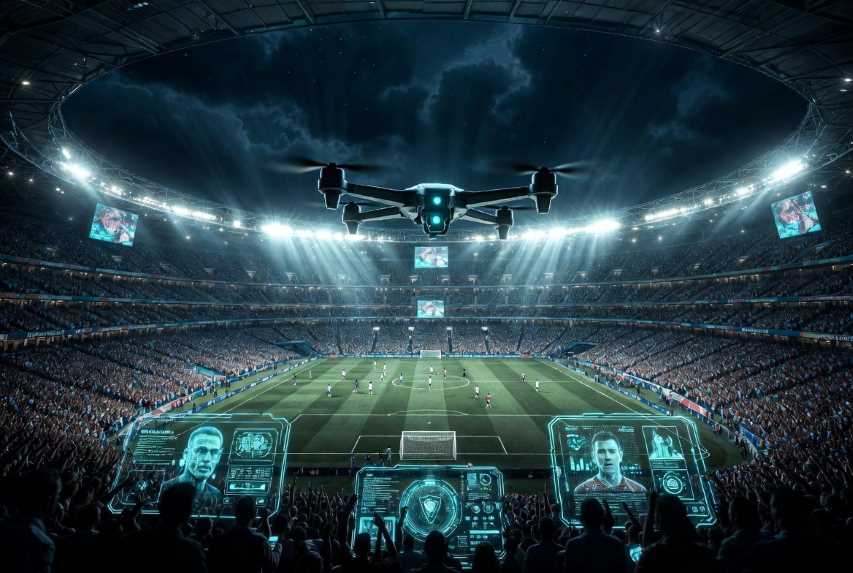
The FIFA World Cup 2026 stands as the largest and most ambitious edition in the tournament’s history. With 48 national teams competing across 104 matches in 16 stadiums spread throughout the United States, Canada, and Mexico, the event is expected to welcome more than six million fans over 39 days. This unprecedented scale brings extraordinary opportunities for global celebration but also heightened responsibilities for safety and security. Protecting elite athletes on the pitch, officials, staff, and millions of spectators — both inside the venues and across digital platforms — requires a sophisticated, multi-layered technological ecosystem.
Unlike previous World Cups, the 2026 edition operates in an environment of evolving threats that include sophisticated cyberattacks, drone incursions, large-scale crowd dynamics challenges, and the rapid weaponization of artificial intelligence by malicious actors. At the same time, fan expectations for seamless experiences, players’ demands for fair and safe competition, and organizers’ need for real-time coordination across three countries have pushed technology to the forefront. The result is a comprehensive security and protection framework that blends physical infrastructure, artificial intelligence, biometrics, advanced sensors, secure digital systems, and integrated command platforms. This framework does not merely react to incidents; it anticipates, detects, and mitigates risks before they escalate while simultaneously enhancing the integrity of the game and the quality of the spectator experience.
The Scale of the Challenge and Why Technology Matters More Than Ever
Hosting a World Cup across three nations creates unique coordination complexities. Eleven host cities in the United States alone, plus venues in Canada and Mexico, require synchronized operations involving more than 400 law enforcement agencies, federal authorities, private security partners, and stadium operators. The sheer volume of people moving through venues, fan zones, transportation hubs, hotels, and team base camps on any given match day demands systems that can process enormous amounts of data instantly and turn that data into actionable intelligence.
Past tournaments offered important lessons. The 2022 World Cup in Qatar demonstrated the value of advanced surveillance and controlled environments, while incidents at other major sporting events highlighted the dangers of overcrowding, perimeter breaches, and the growing threat of unmanned aerial systems. In 2026, these lessons have been combined with newer capabilities in artificial intelligence and biometrics to create a more proactive posture. Federal investment in the United States alone has exceeded one billion dollars, covering everything from enhanced police and emergency response capabilities to specialized counter-drone technology and cybersecurity hardening. This level of resourcing reflects a recognition that traditional security models alone cannot scale to the demands of a 48-team tournament.
Technology serves dual purposes here. For players, it protects physical well-being through more accurate officiating that reduces dangerous on-field confrontations, provides richer data for medical and performance teams, and contributes to overall game flow that minimizes unnecessary stoppages and fatigue. For audiences, technology delivers smoother entry processes, real-time crowd safety monitoring, environmental comfort measures, and robust defenses against digital scams and harassment. Online, both players and fans benefit from encrypted systems, AI-driven threat detection, and moderation tools that combat misinformation and abuse. The following sections examine these protections in depth, beginning with the physical and on-pitch environment inside stadiums.
Inside the Stadiums: Layered Physical Security and On-Pitch Innovations
Stadium security for the 2026 World Cup follows a defense-in-depth philosophy. Multiple concentric layers work together so that the failure of any single measure does not compromise overall safety. The outermost layers begin well before fans reach the turnstiles, while the innermost layers focus on the pitch itself and immediate medical response capabilities.
Perimeter Security, Access Control, and Biometric Systems
The “last-mile” security model requires fans to present valid tickets before they even approach the immediate stadium footprint. Parking areas and approach routes are often fenced and monitored, creating controlled corridors that funnel people through verified checkpoints. Once inside the broader secure zone, fans encounter airport-style screening that includes metal detectors, advanced imaging, and strict enforcement of clear-bag policies. Large backpacks and certain prohibited items are banned to reduce concealment risks and speed up entry lines.
At the heart of modern access control lies the FIFA Fan ID system. Every ticket holder registers for a free digital identity through official channels. This creates a verified profile linked to the individual’s tickets. At participating venues, facial recognition technology can link a fan’s face to their digital profile, enabling frictionless entry and even secure cashless payments without needing to present a physical ticket or card. The system converts biometric data into secure numerical tokens rather than storing raw images in every instance, balancing convenience with privacy considerations. This biometric layer significantly reduces opportunities for ticket fraud and scalping while providing security teams with an auditable record of who is inside the venue at any time.
These measures protect both players and audiences. Faster, more reliable entry reduces crowd pressure at gates — a known risk factor in past incidents at major events. For players, the knowledge that only authorized individuals are in the stadium contributes to a more controlled and focused environment. The combination of physical screening, biometric verification, and perimeter control creates multiple opportunities to identify and intercept threats before they reach sensitive areas.
AI-Powered Surveillance, Crowd Intelligence, and Real-Time Response
Modern stadiums contain hundreds or even thousands of cameras. In previous eras, security teams relied heavily on human operators watching live feeds or reviewing recorded footage after incidents occurred. The 2026 World Cup leverages artificial intelligence to transform these cameras from passive recording devices into active detection systems. AI video analytics platforms process feeds in real time, identifying specific objects, behaviors, and patterns that warrant immediate attention.
The technology can automatically flag the presence of weapons, unattended packages, perimeter breaches, and individuals moving against the flow of crowds. It monitors crowd density in real time and detects sudden surges or unusual clustering that could indicate developing problems. When thresholds are crossed, the system generates alerts within seconds rather than the minutes required for human recognition alone. This compression of response time is critical in preventing small incidents from escalating into major safety events.
Predictive elements add another dimension. By analyzing patterns across multiple matches and venues, AI systems can identify recurring crowd flow issues and recommend adjustments for subsequent games. Security commanders receive unified dashboards that aggregate data from all 16 stadiums, enabling resource reallocation based on emerging situations. Body-worn cameras worn by officers further enhance situational awareness, feeding live video and location data into command centers for better coordination during incidents.
For audiences, these systems translate into safer, less stressful environments. The visible presence of intelligent monitoring, combined with rapid intervention when needed, builds confidence. For players, the same technology protects against external threats while the game is underway, allowing athletes to focus on performance rather than external distractions.
Countering Aerial Threats: Drones, Detection, and Robotic Systems
Unmanned aerial vehicles represent one of the most significant new threat vectors for large-scale public events. The 2026 World Cup has implemented comprehensive No Drone Zones around all stadiums, fan zones, and team base camps. The Federal Aviation Administration has established temporary flight restrictions, and violations carry severe civil and criminal penalties.
Detection networks continuously scan the airspace for unauthorized drones. When a threat is identified, mitigation options include jamming communications, taking control of the drone, or, in extreme cases, kinetic interception. Officers from dozens of jurisdictions have received specialized training in drone threat response. Surveillance drones operated by authorized personnel provide additional eyes in the sky, extending the reach of ground teams and offering rapid assessment of large areas or developing situations.
Robotic platforms add ground-level aerial-adjacent capability. Four-legged robotic dogs equipped with cameras patrol perimeters at key locations such as broadcast compounds and stadium exteriors. These robots can navigate complex terrain, enter potentially hazardous areas, and stream video back to operators without exposing personnel to unnecessary risk. The combination of drone detection, counter-drone systems, authorized surveillance drones, and robotic ground assets creates a three-dimensional security envelope around each venue.
This aerial and robotic layer directly protects both players and fans. A drone carrying prohibited material or attempting surveillance could threaten everyone inside a stadium. By neutralizing such threats early, organizers maintain the integrity of the event and the peace of mind of participants and spectators alike.
On-Pitch Technologies: Precision Officiating and Player Safety
While physical security addresses external threats, technology on the pitch itself protects players through greater accuracy, fairness, and data richness. The 2026 World Cup features significant upgrades to the Video Assistant Referee system and supporting technologies that reduce contentious decisions and improve the overall flow and safety of matches.
Optical tracking systems now employ 16 high-resolution cameras positioned around each stadium. These cameras continuously capture the positions of all players and the ball, tracking more than two dozen skeletal points on each athlete. The data feeds into semi-automated offside technology that can determine player positions with millimeter-level precision. When combined with human review, this dramatically reduces the margin for error on offside calls, penalty decisions, and other critical moments.
The official match ball contains an advanced embedded sensor system. Weighing only about 13 grams and positioned for stability, the sensor uses ultrawideband technology and inertial measurement units to record the ball’s exact location and any touches 500 times per second. This high-frequency data fills gaps between video frames and provides objective evidence for incidents that occur too quickly for the naked eye or standard broadcast cameras to resolve definitively.
Perhaps the most transformative addition is the creation of personalized digital twins for every player. Before the tournament, each of the more than 1,200 athletes steps into a specialized scanning environment where a ring of cameras captures thousands of measurements in roughly six seconds. Advanced processing generates a highly accurate three-dimensional model of the player’s body shape, limb lengths, muscle tone, and even footwear characteristics. These individualized avatars replace generic player models in VAR simulations. Referees can now review plays — including complex situations involving goalkeeper interference or marginal offside positions — with representations that match the actual athletes involved. The result is greater transparency for fans watching broadcasts and greater confidence in decisions that affect match outcomes and player safety.
The synergy among these systems is powerful. Optical tracking provides positional data, the smart ball supplies precise touch and trajectory information, and digital twins ensure that simulations reflect real human proportions. Together they minimize blown calls that could otherwise lead to frustration, confrontations, or unsafe play. More accurate officiating also supports medical teams by providing clearer context when reviewing incidents that may have caused injury. The overall improvement in game flow reduces unnecessary stoppages, helping players maintain rhythm and potentially lowering fatigue-related risks in the later stages of matches.
Medical Response, Health Monitoring, and Environmental Protections
Inside each stadium, medical teams benefit from enhanced coordination tools and data streams. While player tracking during matches focuses primarily on performance and officiating, the same positional data can support post-incident analysis. Concussion protocols have been strengthened, and the availability of high-fidelity video and sensor data aids medical staff in rapid assessment.
For all participants and spectators, environmental conditions receive careful attention. Summer temperatures in several host cities can reach dangerous levels. Organizers have deployed extensive hydration stations, misting systems, cooling tents, and shaded areas. Air quality monitoring and climate control inside venues help mitigate heat-related health risks. Real-time data on crowd density and environmental conditions feeds into command centers, enabling proactive adjustments such as increased water distribution or modified entry pacing during peak heat periods.
These measures protect audiences directly by reducing the likelihood of heat exhaustion or medical emergencies in crowded environments. They also support players by ensuring that match conditions remain as safe and consistent as possible, with medical resources ready to respond within seconds if needed.
The Digital Shield: Online and Cybersecurity Protections
Protection does not end at the stadium gates. In an era of global connectivity, the digital dimension of the World Cup requires equally rigorous safeguards. Players, teams, fans, and organizers all face threats that originate online but can have real-world consequences ranging from financial loss to personal safety risks.
Cybersecurity Threats and the Scale of the Challenge
Major international sporting events have become high-value targets for cybercriminals, state-linked actors, and hacktivist groups. Potential attack vectors include attempts to compromise ticketing systems, manipulate stadium displays or public address systems, disrupt transportation logistics, or steal sensitive data. The excitement surrounding the tournament also creates fertile ground for phishing campaigns, fake ticket sales, and fraudulent travel offers that prey on fans.
Artificial intelligence has amplified both the threat and the defense. Attackers can now generate highly convincing personalized phishing messages and deepfake content with minimal effort. At the same time, defenders deploy AI to analyze network traffic for anomalies, identify malicious domains, and detect coordinated campaigns at machine speed. The 2026 World Cup represents one of the largest real-world tests of these defensive capabilities to date.
AI-Driven Cyber Defense and Secure Digital Infrastructure
Official systems benefit from hardened infrastructure, continuous monitoring, and rapid response protocols coordinated with national cybersecurity agencies. AI tools scan for unusual patterns that may indicate intrusion attempts or data exfiltration. They also help prioritize alerts so human analysts can focus on the most credible threats rather than being overwhelmed by noise.
The official FIFA World Cup applications and ticketing platforms incorporate multiple layers of encryption and authentication. Digital tickets exist only within verified apps, reducing the attack surface compared with paper or easily copied PDFs. Multi-factor authentication and device binding further protect user accounts. When fans register for the FIFA Fan ID, the process includes verification steps designed to prevent impersonation while remaining accessible to a global audience.
Protecting Fans from Scams and Misinformation
Fans face a barrage of fraudulent offers during major tournaments. Fake websites mimicking official ticketing channels, phishing emails promising exclusive hospitality packages, and social media accounts selling counterfeit merchandise all proliferate. AI-powered detection systems work behind the scenes to identify and takedown malicious domains and posts. Public awareness campaigns complement these technical measures by educating fans on how to verify official sources.
Misinformation presents another risk. False claims about security incidents, transportation disruptions, or health threats can spread rapidly and create unnecessary panic or dangerous crowd movements. Content moderation tools, both automated and human-assisted, monitor official channels and work with platform partners to limit the reach of harmful falsehoods. Accurate, timely information from trusted sources helps maintain calm and orderly behavior both inside and outside stadiums.
Safeguarding Players in the Digital Realm
Elite athletes often become targets of online abuse, harassment, and doxxing during high-profile tournaments. Coordinated campaigns can affect mental well-being and, in extreme cases, spill over into real-world threats against players or their families. Moderation systems and monitoring protocols help identify and address the most severe instances of abuse. FIFA and participating national federations maintain policies and support structures that allow players to focus on their performance without constant exposure to toxic digital environments. Secure communication channels for teams and officials further reduce the risk of sensitive information being compromised.
Data Privacy, Biometrics, and Ethical Considerations
The expanded use of facial recognition and other biometric technologies raises legitimate questions about privacy and data governance. Organizers have implemented strict data retention policies, encryption standards, and access controls. In many cases, biometric templates are stored as mathematical representations rather than images, and data is deleted after defined periods unless longer retention is required for security investigations. Compliance with privacy regulations across multiple jurisdictions adds complexity but also drives more responsible data handling practices.
Transparency remains essential. Fans who opt into biometric entry receive clear information about how their data is used and protected. The goal is to deliver the convenience and security benefits of these technologies while respecting individual rights and maintaining public trust. Ongoing dialogue between organizers, privacy advocates, and technology providers helps refine approaches for future events.
Integration, Command Centers, and the Innovation Ecosystem
One of the defining characteristics of the 2026 security and protection model is the high degree of integration across systems. Physical surveillance feeds into the same operational picture as cyber threat intelligence. Crowd density data from stadium cameras informs both security deployments and medical resource positioning. Player tracking data supports officiating decisions while also contributing to broader performance and safety analytics.
Intelligent command centers serve as the nerve centers of this integrated approach. Large displays aggregate live video, sensor data, alerts, and resource status from across all venues. Operators can drill down from a tournament-wide view to a specific camera feed or incident report in seconds. Collaboration tools allow teams in different cities and different agencies to share information and coordinate responses seamlessly. The result is a level of situational awareness that would have been impossible with siloed systems.
Technology partners contribute specialized capabilities that together create a more capable whole. Companies focused on video analytics, biometric identity, drone defense, body-worn cameras, sensor technology, and cloud infrastructure each bring deep expertise. When these components connect through common data standards and shared command platforms, the combined effect exceeds what any single technology could achieve alone. This ecosystem model — where best-of-breed solutions interoperate rather than compete in isolation — represents a significant evolution in how major events approach security and operational excellence.
Challenges, Trade-offs, and the Enduring Legacy
No technological system is perfect, and the 2026 World Cup has required careful navigation of trade-offs. Biometric convenience must be balanced against privacy expectations. AI detection systems must minimize false positives that could cause unnecessary disruptions while still catching real threats. Multi-country coordination demands compatible standards and clear communication protocols. The sheer cost and complexity of deploying these systems across 16 venues test logistical and financial resources.
Public perception also matters. Fans must feel that security measures enhance rather than detract from the celebratory atmosphere. Overly intrusive screening or visible heavy security can create tension; the most effective deployments are those that feel efficient and unobtrusive while still being thorough. Continuous feedback loops during the tournament allow organizers to adjust procedures in real time.
Looking beyond 2026, the technologies and operational models refined during this World Cup will influence future sporting events, public gatherings, and critical infrastructure protection. Lessons learned about AI-assisted crowd management, integrated command systems, biometric identity at scale, and multi-layered drone defense will migrate into other domains. The digital twin concept, proven valuable for officiating accuracy, may find broader applications in injury prevention, training personalization, and broadcast enhancement. Cybersecurity practices developed under tournament pressure will strengthen defenses for other high-visibility targets.
Perhaps most importantly, the 2026 World Cup demonstrates that technology, when thoughtfully designed and responsibly deployed, can simultaneously increase safety, improve fairness, enhance user experience, and protect privacy. It is not a replacement for skilled human judgment and strong operational leadership, but rather a powerful multiplier that extends human capabilities and compresses response times in ways that save lives and preserve the joy of the event.
The FIFA World Cup 2026 showcases the maturity of modern protective technologies across physical and digital domains. Inside stadiums, layered security featuring biometrics, AI analytics, counter-drone systems, and robotic platforms creates secure environments for players and fans alike. On the pitch, precision tracking, smart balls, and personalized digital avatars elevate officiating accuracy and contribute to safer, fairer competition. Online, encrypted platforms, AI threat detection, scam prevention, and moderation tools shield both athletes and audiences from digital harms that could otherwise undermine the tournament’s success.
These measures do not exist in isolation. They form an integrated fabric of protection that anticipates threats, enables rapid coordinated response, and supports the broader goals of the event: celebrating football at the highest level while keeping millions of participants and spectators safe. As the tournament progresses and concludes, the world will witness not only extraordinary athletic performances but also a demonstration of how technology, governance, and human expertise can come together to manage complexity at global scale.
For fans, players, and organizers, the ultimate measure of success will be an event remembered for thrilling matches, memorable moments, and the quiet confidence that comes from knowing that comprehensive, intelligent protection systems were working tirelessly behind the scenes. The 2026 World Cup thus serves as both a celebration of the beautiful game and a powerful case study in the responsible application of technology for the common good.
 |  |  |
 |  |  |