🤔 What Is a Hologram?
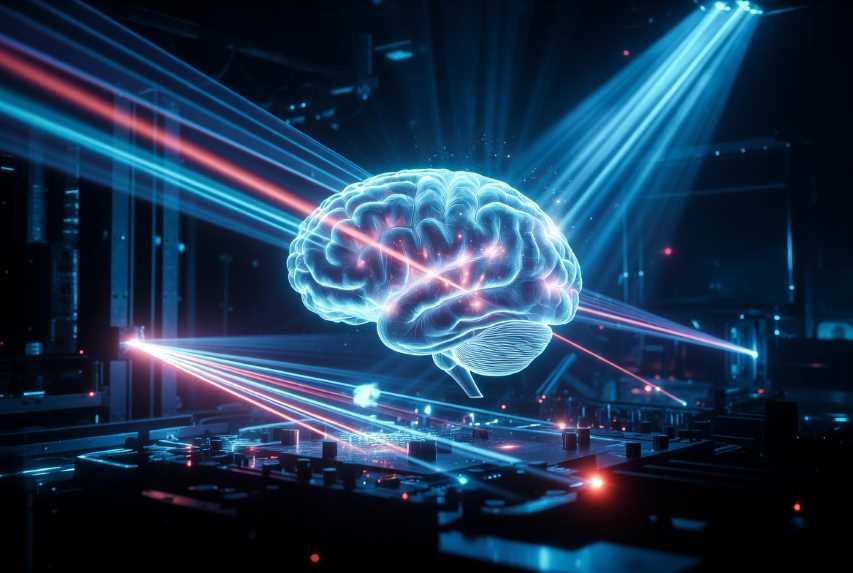
A hologram is a virtual three‑dimensional (3D) representation of an object or a person that is displayed using light. Unlike a traditional photograph, which captures only the intensity of light on a flat surface to create a two‑dimensional picture, a hologram records both the intensity and the phase of light waves. This extra information allows a hologram to reproduce the entire light field scattered from the original object. As a result, when you view a hologram, you see a lifelike 3D image that changes perspective as you move around it, as if the object itself were still present.
The term “hologram” comes from the Greek words hólos (whole) and gráphein (to write). It can refer both to the physical recording medium (the film or plate) and to the image that it produces.
✨ The Science Behind the Magic: How Holograms Work
To understand holography, you first need to grasp a few basic properties of light and its wave‑like nature.
🌊 The Principles: Interference and Diffraction
Interference occurs when two or more waves of light meet and overlap. Depending on how their peaks and troughs align, they can either reinforce each other (constructive interference) or cancel each other out (destructive interference). This creates a complex pattern of light and dark fringes.
Diffraction is the bending of light waves around obstacles or through narrow slits. When light encounters a recorded interference pattern, it bends and scatters in predictable ways, reconstructing the original wavefront.
A hologram is essentially a recording of an interference pattern. When that pattern is later illuminated correctly, the light diffracts off the pattern and “bends” to recreate the original 3D light field.
🛠️ The Process: Recording and Reconstruction
Recording a Hologram
To make a traditional hologram, you need a laser—a source of coherent, monochromatic (single‑wavelength) light. The laser beam is split into two separate beams:
Object Beam: This beam is directed onto the object you want to holograph. The light scatters off the object and carries information about its shape and surface.
Reference Beam: This beam travels directly to the recording medium (a photographic plate or film) without hitting the object.
When these two beams meet on the recording medium, they interfere with each other, creating a microscopic pattern of interference fringes. This pattern is the hologram. It looks nothing like the original object—just a seemingly random swirl of lines and shapes.
Reconstructing the Image
To view the holographic image, you illuminate the developed recording medium with a light beam that is identical to the original reference beam. When this beam hits the interference pattern, it diffracts, bending and scattering in a way that perfectly recreates the original wavefront that came from the object. Your eye perceives this reconstructed wavefront as a three‑dimensional image of the original object.
💡 A Crucial Difference from Photography: A photograph records only the intensity of light. A hologram records both the intensity and the phase (the position of the wave peaks). That is why a photograph is flat, while a hologram is three‑dimensional.
🧩 The Many Threads: Types of Holograms
Although holograms come in many forms, most are variations or hybrids of two primary types: transmission and reflection holograms.
🔦 Transmission Holograms
A transmission hologram is viewed by shining a light source—often a laser—through the hologram from behind. The image appears on the opposite side. These holograms are known for their exceptional detail and full parallax, meaning the image shifts realistically as you move around it. They are often used in scientific and technical applications where high precision is required.
💡 Reflection Holograms
A reflection hologram is viewed by reflecting white light (like a spotlight or sunlight) off its surface. The image appears in front of the hologram, almost like a painting. These are the holograms most people are familiar with—the ones that seem to float in mid‑air. They are commonly used on credit cards, ID cards, and banknotes as security features to prevent counterfeiting.
🔀 Hybrid Holograms
Hybrid holograms combine elements of both transmission and reflection holography to create complex, high‑quality 3D images. Some hybrids also integrate Computer‑Generated Holography (CGH) with Spatial Light Modulators (SLMs) to reconstruct both 2D and 3D holographic images. Other subtypes include volume holograms, which are recorded within a thick photosensitive material, and holographic optical elements (HOEs), which are used in specialised optical devices.
💻 Computer‑Generated Holograms (CGH)
Instead of recording light scattered from a real object, computer‑generated holograms are created using digital algorithms that simulate the interference pattern. This allows for the synthesis of holograms of objects that do not exist in the real world, making CGH a cornerstone of next‑generation holographic displays.
🌍 Holograms in the Real World: Applications
Holography has moved far beyond the laboratory and is now making a significant impact across a wide range of industries.
🛡️ Security and Authentication
Holograms are a trusted defense against forgery. They are found on credit cards, driver’s licenses, banknotes, and passports because they are extremely difficult to replicate. The global hologram market is seeing significant growth driven by increasing demand for anti‑counterfeiting measures.
🏥 Healthcare and Medical Imaging
Holography is revolutionizing medicine by providing enhanced visualisation of complex anatomical structures.
Surgical Planning & Simulation: Surgeons can interact with 3D holographic models of a patient’s organs before an operation, improving precision and outcomes.
Medical Education: Students can explore a “holographic museum” of anatomical structures—from the eyeball to the brain—in fine detail, without the need for cadavers.
Telemedicine: Holographic consultations allow specialists to appear as lifelike 3D projections, making remote diagnosis and collaboration more intuitive.
🎓 Education and Training
Holographic educational tools offer significant advantages over VR or AR because they do not require a head‑mounted display or handheld equipment. Students can gather around a hologram and view it from any angle, making complex subjects like anatomy, engineering, and physics more accessible and engaging.
🎬 Entertainment and Media
The entertainment industry is eagerly pursuing holographic displays. While mass‑market holographic TVs are still a few years away, prototypes are emerging that promise a future where sports players “leap off the screen” and cinematic objects float realistically in your living room. Holographic technology is also being used in live performances to bring deceased artists back to the stage or to create stunning visual effects.
🛍️ Retail and Advertising
Holographic displays are used in retail to create eye‑catching product presentations, allowing customers to view items from all angles without opening boxes. They are also used at trade shows and events to create memorable, immersive brand experiences.
🚗 Automotive and Aerospace
Holography is used in head‑up displays (HUDs) in cars and aircraft, projecting critical information (speed, navigation, warnings) directly into the driver’s or pilot’s line of sight. This enhances safety by allowing them to keep their eyes on the road or sky.
🔮 The Future of Holography: Emerging Trends
The future of holography is incredibly bright, driven by breakthroughs in materials, computing, and display technology.
📱 Holograms on Your Smartphone
Researchers have found a way to use OLEDs (the screens in your phone) and metasurfaces to create holograms, overcoming the main barrier of requiring bulky lasers. This simpler, more compact approach is potentially cheaper and easier to apply, bringing holographic displays closer to everyday devices like smartphones.
🥽 Next‑Generation AR/VR Displays
Holography is a promising candidate for future virtual and augmented reality near‑eye displays because it can provide natural 3D depth cues through wavefront reconstruction. Researchers are developing ultra‑thin waveguide holography and AI‑driven algorithms to create compact, high‑performance AR glasses. These displays could offer wide fields of view and large eyeboxes while eliminating the vergence‑accommodation conflict that causes eye strain in current VR/AR headsets.
🧠 AI‑Powered Holography
Artificial intelligence is playing an increasingly important role. AI‑driven holography algorithms can improve image quality, expand the viewing angle, and enable real‑time hologram generation. The emergence of AI‑enabled hologram portals represents a significant leap forward in how we visualise and interact with digital content.
🌿 Metasurfaces and Flat Optics
Metasurfaces—ultra‑thin, engineered surfaces that can manipulate light in ways that natural materials cannot—are opening up new possibilities for holography. They can create compact, efficient holographic projectors that are far smaller and lighter than traditional optical systems.
🧠 Hologram vs. Augmented Reality: What’s the Difference?
The terms “hologram” and “augmented reality” (AR) are often confused, but they are fundamentally different.
Feature | Hologram | Augmented Reality (AR) |
|---|---|---|
| Nature | A freestanding object of light that exists in physical space | A digital layer superimposed on the real‑world view |
| How It Works | Records and reconstructs an entire light field using interference and diffraction | Overlays computer‑generated images onto a view of the real world, typically via a screen |
| Viewing | Can be viewed with the naked eye from any angle | Requires a device (phone, tablet, or AR headset) to see |
| Existence | A true hologram is a physical phenomenon; the image exists in space | A digital overlay; the image only exists within the device ‘s display |
In short: a hologram is an object made of light, while augmented reality is a digital layer painted onto the canvas of our world.
The Holographic Age Is Dawning
From its origins as a Nobel Prize‑winning scientific breakthrough to its current role as a cutting‑edge tool in medicine, security, and entertainment, holography has come a long way. We are now on the cusp of a holographic age, where 3D light‑field displays will become as common as the flat screens we use today.
The journey from science fiction to everyday reality is well underway. With advancements in AI, OLED technology, and metamaterials, the holograms of tomorrow will be brighter, more detailed, and more interactive than ever before. The future is not just something we watch—it is something we will be able to reach out and touch.
💡 Pro Tip: The next time you look at a hologram on your credit card or at a museum, take a moment to appreciate the extraordinary physics that make it possible—a tiny piece of the universe captured in light.
 |  |  |
 |  |  |