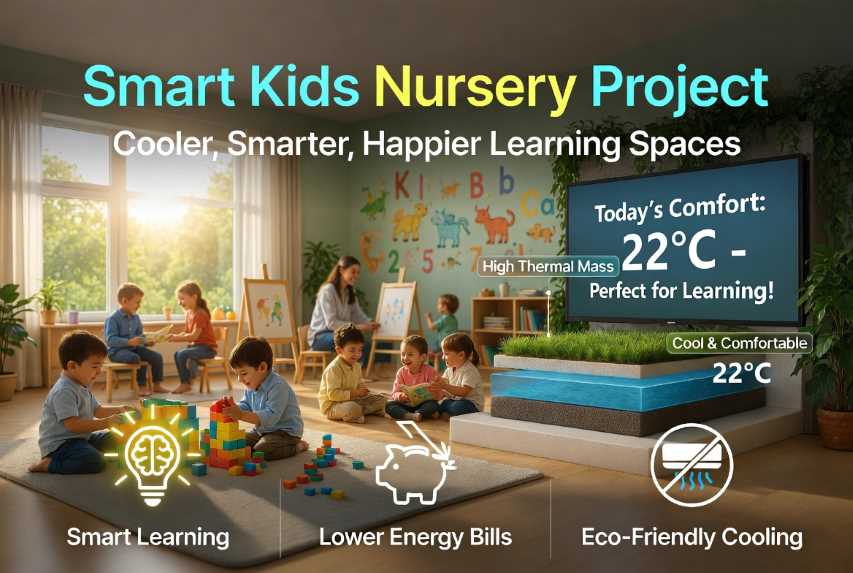
A child's early years are the most critical for development, safety, and learning. Traditional nurseries rely heavily on manual supervision, paper records, and generic activities. However, a Smart Kids Nursery Project transforms an early childhood center into an intelligent, connected, and responsive environment that enhances child safety, streamlines caregiver workflows, personalizes learning, and gives parents peace of mind through real-time insights.
This comprehensive guide explores how cutting-edge technologies like the Internet of Things (IoT), Artificial Intelligence (AI), facial recognition, and wearable devices are revolutionizing early childhood education and care.
🤔 What is a Smart Kids Nursery Project?
A Smart Kids Nursery is an integrated ecosystem where physical spaces, digital tools, and data analytics work together to improve every aspect of early childhood care. It moves beyond simple CCTV cameras and digital check‑ins to create a holistic, secure, and engaging environment for children, parents, and staff.
At its core, the smart nursery uses a network of connected devices—smart wearables, environmental sensors, interactive learning tools, and intelligent monitoring systems—to collect and act upon real‑time data. This data informs everything from health and safety protocols to individualized learning plans and parent communication.
✨ Why Smart? The Core Benefits for Children, Parents & Staff
🛡️ Uncompromising Safety and Security
Child safety is the number one priority. A smart nursery provides multiple layers of protection:
Secure Access Control: Facial recognition or RFID card entry ensures only authorized parents, staff, and children can enter the facility. Unauthorized attempts trigger immediate alerts.
Real‑time Location Tracking: Children wear safe, non‑toxic wristbands that allow staff to know their exact location within the nursery at all times. Geofencing alerts are triggered if a child approaches an exit or restricted area.
Fall and Distress Detection: AI‑powered cameras with computer vision can detect sudden falls, prolonged stillness, or signs of distress, alerting caregivers instantly.
Contactless Temperature Screening: Thermal cameras at entry points screen children and visitors for fever, helping prevent the spread of illness.
🌿 Healthy Environment Monitoring
Children are more vulnerable to poor air quality, extreme temperatures, and noise. Smart sensors continuously monitor:
Air Quality (CO₂, VOC, PM2.5): Automatically triggers ventilation systems when CO₂ levels rise, improving concentration and reducing airborne illness.
Temperature & Humidity: Keeps play and sleep areas within optimal comfort ranges.
Noise Levels: Alerts staff when noise exceeds safe thresholds, protecting young ears and reducing stress.
📊 Data‑Driven Care and Personalized Learning
Every child develops at their own pace. Smart systems help caregivers tailor activities to individual needs:
Activity Tracking: Wearables and interactive smart toys track how long a child engages in different activities (fine motor, gross motor, language, etc.), highlighting strengths and areas needing support.
Digital Developmental Portfolios: AI assists in logging milestones, capturing photos/videos of achievements, and generating progress reports automatically—saving hours of paperwork.
Personalized Learning Recommendations: The system suggests specific activities, books, or songs based on the child's observed interests and developmental stage.
📱 Enhanced Parent Engagement and Peace of Mind
Parents no longer have to wonder what their child is doing. Smart nurseries provide:
Real‑time Updates via Mobile App: Daily reports on naps, meals, diaper changes, mood, and activities. Photo and video snapshots are shared securely.
Live Video Streaming (Optional): Secure, private live feeds allow parents to check in on their child from work.
Two‑way Communication: Parents can message teachers directly through the app, reducing phone tag and missed calls.
Automated Billing & Scheduling: Digital check‑in/out syncs with billing, and parents can easily schedule extra days or notify of absences.
👩🏫 Reduced Staff Burnout and Administrative Load
Caregivers spend less time on repetitive paperwork and more time with children.
Automated Attendance & Headcounts: Facial recognition at drop‑off/pick‑up eliminates manual sign‑in sheets.
Digital Daily Sheets: Nap times, meals, and diaper changes are recorded with a few taps on a tablet.
Emergency Preparedness: Instant digital roll call during drills or real emergencies shows exactly which children are present.
🛠️ Core Components of a Smart Kids Nursery
A smart nursery integrates several key technologies working seamlessly together.
🖐️ Smart Wearables for Children
Comfortable, non‑toxic, and waterproof bands worn by children. They typically include:
RFID or BLE (Bluetooth Low Energy) for location tracking.
Temperature sensor (optional) to monitor for fever.
Button for child to call for assistance (age‑appropriate).
Tamper‑alert if the band is removed.
📷 AI‑Powered Security and Monitoring
Facial Recognition Cameras at entrances and exits.
Computer Vision Analytics in play areas to detect falls, running, or fighting.
Thermal Imaging for contactless health checks.
🌡️ Environmental Sensor Network
Small, wireless sensors placed in each room that measure:
CO₂, temperature, humidity, light levels, noise, and even volatile organic compounds (VOCs) from cleaning supplies.
📱 Centralized Nursery Management Software (Cloud‑Based)
A digital dashboard used by administrators and teachers to view all data, manage attendance, communicate with parents, generate reports, and receive alerts. Often includes a parent mobile app.
🎮 Interactive Smart Learning Tools
Smart Boards / Interactive Panels for group activities and storytelling.
Smart Toys that track engagement and adapt difficulty (e.g., programmable robots for preschoolers).
Digital Drawing Tables that capture creativity and fine motor progress.
🔐 Privacy, Ethics, and Safety Considerations
With great technology comes great responsibility. Smart nurseries must address:
👁️ Data Privacy
All data collected (location, video, developmental records) must be fully encrypted and stored securely.
Parents should give explicit, informed consent for each type of data collection (e.g., location vs. video vs. learning analytics).
Data should never be sold to third parties.
👧 Child‑Friendly, Non‑Intrusive Design
Wearables must be comfortable, lightweight, and free of sharp edges or toxic materials.
Cameras should be placed to monitor spaces, not to intrude on private moments like diaper changes or naps (unless strictly for safety with clear policies).
Alerts should be designed to avoid causing panic among children.
⚖️ Ethical Use of AI
AI should assist, not replace, human judgment. A fall detection alert should summon a teacher, not automatically assume injury.
Facial recognition for entry/exit is acceptable for authorized adults, but for children, a simple RFID band is less invasive.
Algorithms used for learning analytics should be transparent and free from bias.
👨👩👧 Parental Control and Transparency
Parents should have access to all data collected about their own child.
Option to opt out of certain features (e.g., live video streaming) while retaining core safety benefits.
Clear policies on how long data is retained (e.g., delete video after 30 days unless an incident occurred).
🧰 How to Implement a Smart Kids Nursery Project: Step‑by‑Step
Assess Needs and Goals: Identify the biggest pain points—safety, parent communication, staff workload, learning personalization? Prioritize features accordingly.
Choose an Integrated Platform: Instead of buying separate systems (access, video, wearables, software), look for an all‑in‑one nursery management platform. Examples include Kinderlime, BrightWheel, HiMama, or SmartCare.
Install Hardware: Deploy facial recognition cameras at entry/exit, environmental sensors in each room, and provide staff with tablets/mobile devices. Order child wearables.
Configure Alerts and Automations: Set thresholds for temperature, noise, CO₂, and location geofences. Define who receives which alerts.
Train Staff Thoroughly: Run drills on using the system, responding to alerts, and entering daily observations. Address privacy concerns.
Onboard Parents: Introduce the mobile app, explain data collection, and obtain consent forms. Start with basic features (attendance, daily reports) before adding live video or location tracking.
Pilot and Iterate: Run a pilot with one classroom for two weeks, gather feedback, adjust settings, then roll out to the entire nursery.
💡 Real‑World Example: A Day in a Smart Nursery
8:00 AM – Emma arrives with her father. Facial recognition at the door logs her attendance and automatically sends a “checked in” notification to her mother’s phone. A thermal camera takes Emma’s temperature—no fever, so she’s cleared to enter.
9:30 AM – Emma is playing with building blocks. Her smart wristband tracks that she has spent 15 minutes on fine motor activities. The system suggests to her teacher, “Emma would benefit from a threading beads activity.”
11:00 AM – Nap time. The environmental sensor shows the nap room has reached optimal temperature and CO₂ levels. Emma’s wristband detects she is still for 20 minutes and logs the nap duration.
2:00 PM – Emma wanders near the garden exit. The geofence triggers a silent alert to the teacher’s watch, and the teacher gently redirects her. No drama, just prevention.
4:00 PM – Emma’s father picks her up. Facial recognition logs her out. The parent app automatically generates a daily report: nap 1.5 hours, ate all lunch, diaper changes, one fall (detected by camera, teacher verified no injury), favorite activity: painting. Photos of her artwork are included.
🏁 The Smart Kids Nursery Project is far more than a tech upgrade—it is a complete reimagining of early childhood education and care. By weaving together IoT sensors, AI analytics, wearables, and cloud‑based management, it creates an environment where children are safer, parents are more connected, and teachers are empowered to focus on what truly matters: nurturing young minds.
Challenges like privacy, cost, and staff training are real, but the benefits—reduced anxiety for parents, fewer safety incidents, personalized learning, and lower administrative burden—are transformative. As technology becomes more affordable and user‑friendly, the smart nursery will soon be the standard, not the exception.
For any nursery owner or operator looking to the future, the question is no longer “Should we go smart?” but rather “How quickly can we start?”
 |  |  |
 |  |  |